Social media marketing for shipyards decides whether an owner's representative comparing three yards for a major refit sees your capability demonstrated in detail, or finds a thin feed that gives them no reason to shortlist you. A refit or major repair is a long-cycle, high-value decision: buyers want to see real project documentation — before, during and after — technical capability, and evidence the yard delivers on schedule, before they commit months and six figures. Marine Marketing International runs this discipline as a complete system — project documentation that proves capability, timelapse and progress content that builds confidence during long projects, and a presence built for the owners' reps and brokers who decide where major work goes. We work alongside shipyards on real refit projects surfaced through the brokerage platforms we operate, so every tactic here is tested against real project cycles, not theorised.
En bref
- This social media programme for shipyards, run by Marine Marketing International, starts from €4,500 for build, with ongoing management typically €1,000 to €2,500 a month.
- MMI works alongside shipyards on refit and repair projects surfaced through brokerbarche.com and yachtbrokersgreece.com, so every capability message is tested against real projects first.
- A refit decision is long-cycle and high-value: owners' reps compare documented capability and delivery track record, not a single striking photo.
- Every social media marketing programme ships with a project-documentation content plan, capability showcases and monthly reporting as standard.
Why social media marketing matters for shipyards
A major refit or repair project is decided over weeks, sometimes months, by an owner's representative comparing capability, capacity and track record across two or three yards. That decision is shaped heavily by what the yard has visibly delivered before — and increasingly, that visible evidence lives on social media rather than in a printed brochure. Generic social media management, an occasional yard photo, proves nothing about the capability a buyer is actually screening for.
The practical consequences follow. Content needs to document real projects in progress, not just finished results, because an owner's rep wants to see process and standards, not only outcomes. Posts need to demonstrate capacity — haul-out size, berth depth, specialist trades on staff — because a yard that cannot show it can handle a specific project loses the enquiry before a call happens. And long project cycles mean the content calendar has to sustain interest over months, not weeks.
Consider two yards with similar capability and similar capacity. The one running a structured programme converts a materially higher share of enquiries into shortlisted, then won, projects, because every post builds the specific kind of confidence a major commitment requires. The other posts occasionally and relies on reputation alone, missing every owner's rep who researched online first and found nothing current.
What owners' reps and brokers look for before shortlisting
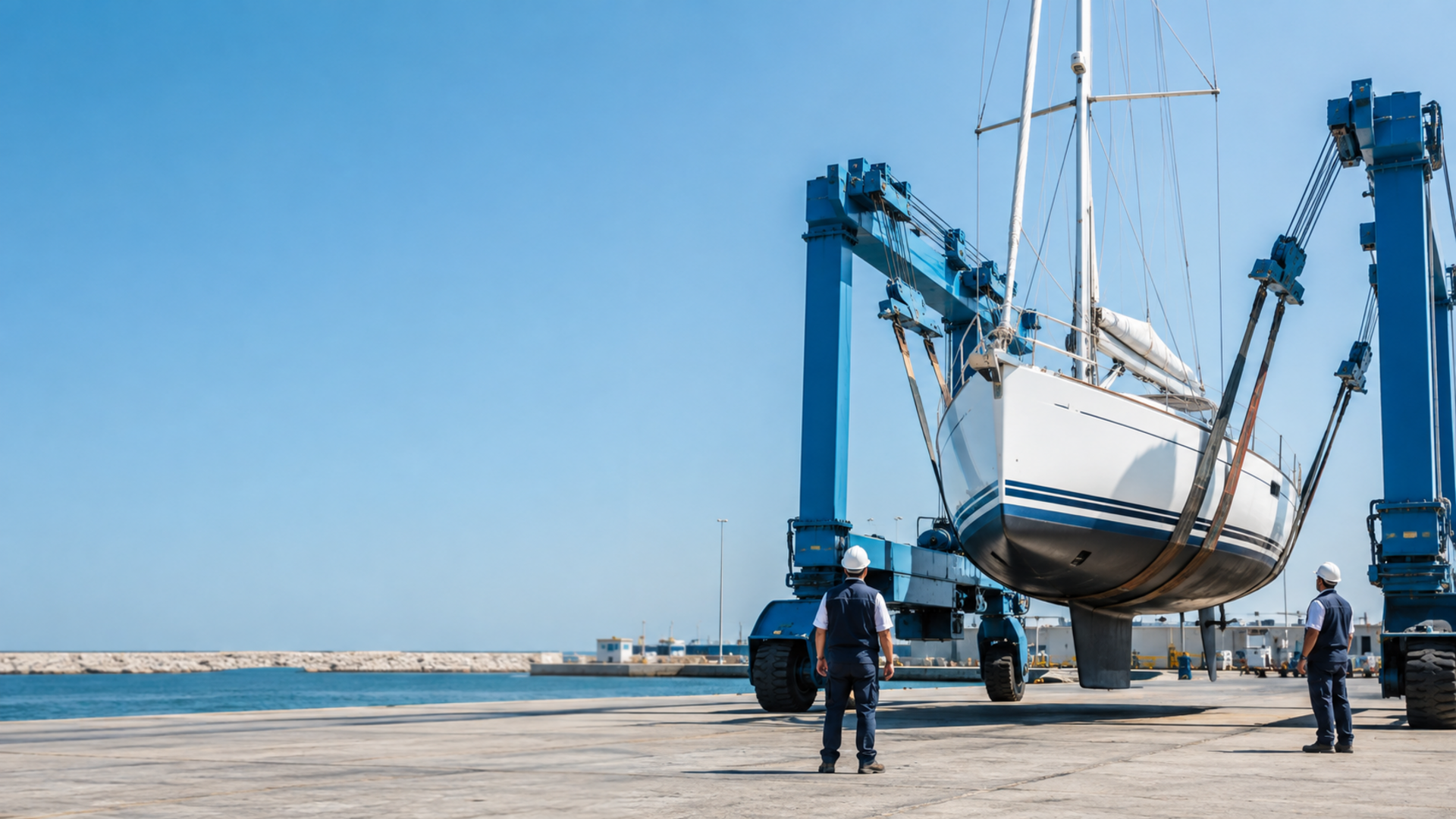
A buyer researching a yard for a major project is judging capacity and process as much as finished results — visible haul-out and lift capability, evidence of the specialist trades a project needs, and documentation that shows work in progress, not just a polished after photo. Photography and video of active projects, not stock yard images, are what a shipyard feed is judged on first.
What moves a browsing owner's rep to an enquiry is specificity and proof of schedule discipline. A post naming the capability and capacity relevant to a specific project type, a caption that shows a project delivered on the timeline promised, a reply to an enquiry within the working day — each signals a yard that will actually deliver. Major refit decisions often carry real financial risk if a yard overruns, so evidence of schedule discipline carries outsized weight.
This is why the discipline cannot be delegated to a generalist social media manager posting generic harbour photography on a fixed schedule. The content, cadence and proof-of-capability signalling that convert enquiries into won projects are specific to how major refit and repair decisions are actually made, and rarely understood outside the trade itself.
Employer branding matters here too, more than in most marine sectors. A shipyard's social channels are increasingly where skilled tradespeople decide whether a yard is worth applying to, and a yard that documents its projects, its standards and its team well finds it easier to recruit the specialist trades that capacity actually depends on. That recruitment benefit alone, separate from any new business it generates, often justifies the investment on its own.
The anatomy of a channel that wins projects, not just followers
The capability-winning machinery is specific to shipyards. A content calendar built around real project documentation — before, during and after, with process detail that shows standards, not just results. Capacity and capability content — haul-out size, lift weight, specialist trades on staff — kept current and easy to find. A reply protocol that answers capacity and scheduling questions within the working day, because major enquiries often carry a decision deadline. And LinkedIn given real weight alongside Instagram, because owners' reps and brokers who commission major work live on LinkedIn as much as anywhere.
Around that machinery sits the content that actually wins projects: timelapse or progress-series content that makes a long refit watchable, technical explainer content that demonstrates real expertise, and visible relationships with the brokers who refer major work. This is where our digital marketing for shipyards work and our social channels overlap deliberately: paid and organic both proving the same capability to the same evaluating buyer.

The content engine: your real project pipeline
Most yards treat social media as an afterthought when it is, in practice, where a growing share of owners' reps and brokers form their first impression of capability — before the site visit, before the quote request. A programme that treats the channel as a proof-of-capability engine outperforms an occasional, unplanned presence.
Ours is engineered around a proven anatomy: a project-documentation calendar that sustains interest across long refit cycles, capacity and capability content kept current, and LinkedIn engagement that keeps a yard visible to the brokers and owners' reps who commission major work. Around the engine sits machinery buyers never see: UTM-tagged links from bio to enquiry form, saved-reply templates for the capacity and scheduling questions that repeat constantly, and monthly reporting that separates genuine project enquiries from vanity engagement.
Consistency across a long project matters more than volume here. A yard that documents one major refit properly, from arrival to relaunch, builds more buyer confidence than one posting daily without ever showing a project through to completion, because owners' reps are ultimately buying delivery, not just presence.

Ce que vaut un meilleur marketing des réseaux sociaux, en chiffres
The commercial case for social media marketing for shipyards is not folklore; it is measured. Stanford’s web-credibility research found that around 75% of users judge a company’s credibility from its design and presentation alone — for a shipyard, that judgment shapes whether an owner's rep even requests a site visit. Google’s own research puts the first visual impression at about 50 milliseconds, and found that 53% of mobile visitors abandon pages that take longer than three seconds to load; industry conversion studies consistently price each extra second of delay at roughly 7% of conversions, a cost that applies just as directly to a slow-loading enquiry link shared by a broker. In shipyard terms the arithmetic is direct: a single major refit project can be worth tens of thousands to hundreds of thousands of euros, so if a better-run programme wins even one additional project a year, it repays the programme cost many times over almost immediately.
These returns compound in a way an unmanaged feed cannot. A well-run programme keeps building a documented track record as the content calendar matures, converting a rising share of enquiries into shortlists and won projects as the portfolio of visible, completed work grows, while a stale feed drifts the other way as owners' reps default to whichever yard shows more current, more convincing evidence. That gap compounds across every project cycle a yard leaves its channel neglected, and rarely closes on its own once a competitor pulls ahead in visible credibility.
The same arithmetic works in reverse. A yard with no visible channel is not simply invisible online, it is absent from the shortlisting research a growing share of owners' reps now do before ever visiting a yard in person, and that comparison happens whether or not the yard is part of it.
Ce que comprend un projet MMI
One accountable programme for shipyards: channel strategy and a project-documentation content calendar; capacity and capability content kept current; LinkedIn engagement for owners' reps and brokers; reply protocols for time-sensitive enquiries; progress and timelapse content for long refit cycles; and monthly reporting tied to shortlists and won projects, not just likes. Programme build starts from €4,500 with management typically €1,000 to €2,500 a month, priced fixed and quoted in writing before work begins. First-year setup includes a documentation template built around your yard's typical project length, at no extra charge.
After the initial build, most yards keep us managing the channel year-round, documenting new projects as they progress and deepening broker and owner's-rep engagement as relationships grow. Read notre histoire pour comprendre l'origine de cette approche.

Proven alongside shipyards on our own platforms
We do not ask shipyards to trust a portfolio in the abstract. We operate brokerbarche.com and yachtbrokersgreece.com, and refit and repair work surfaces constantly through the brokers and owners we work with on those platforms. When we specify a content cadence or a capability-presentation approach in a client account, it is the version that has actually helped a yard win a project through one of our own brokerage relationships. Standards and market context come from the industry bodies we follow — British Marine, the European Boating Industry et ICOMIA — pas du folklore marketing générique.
That operating experience is also why our scopes are precise: we know which content actually wins major projects for a given yard's specialism and capacity, which posts owners' reps and brokers actually share and remember, and we quote every proposal itemised against outcomes rather than deliverable jargon. We track every enquiry back to the post or referral that produced it, so the reporting we send is a record of won projects, not a list of impressions delivered.