Social media marketing for marinas decides whether your Facebook page and Instagram feed become the first place a boat owner checks for berth availability, or a stale gallery nobody opens between renewal notices. A marina sells two things through social channels: berths to owners actively searching, and reputation to the wider boating community who decide where friends should moor. Marine Marketing International runs this discipline as a complete system — aerial and dockside content that shows real berth conditions, live-availability posts timed to renewal and turnover cycles, and community management that keeps a marina’s Facebook group active rather than abandoned. We operate marine platforms of our own, so every tactic here is tested against real audiences, not theorised.
Fast facts
- This social media programme for marinas, run by Marine Marketing International, starts from €4,500 for build, with ongoing management typically €1,000 to €2,500 a month.
- MMI operates boatrentalbalearics.com, brokerbarche.com and yachtbrokersgreece.com, so every content and community tactic is tested on our own audiences first.
- A marina’s social channels serve two audiences at once: owners actively searching for a berth, and the wider boating community forming an opinion of the marina’s reputation.
- Every social media marketing programme ships with an aerial and dockside content plan, live-availability posts and monthly reporting as standard.
Why social media marketing matters for marinas
A berth is a recurring, high-value relationship, not an impulse purchase, so a marina’s social channels are judged less on a single scroll-stopping photo and more on whether they read as a well-run, well-maintained place worth trusting a boat to for a season or a lifetime. Generic social media management — a few pretty sunset photos a week — misses that judgment entirely, because it never shows the berths, the security or the maintenance standard a prospective tenant actually wants reassurance about.
The practical consequences follow. Content needs to show real conditions — pontoons, security gates, the travel-lift, the workshops — because a boat owner comparing marinas checks for the details a stock photo hides. Posts need a route to a berth enquiry, not just a like. And community management matters as much as posting: a marina’s Facebook group or page comments are where reputation is actually formed, one reply at a time.
Consider two marinas with similar berth counts and similar follower numbers. The one running a structured programme converts a meaningfully higher share of that reach into berth enquiries and renewals, because every post and reply is built to reassure a specific owner making a specific decision. The other posts scenic photography with no route to enquiry, and watches occupancy drift while a competitor two bays over fills its waiting list.
What builds trust in a marina's feed
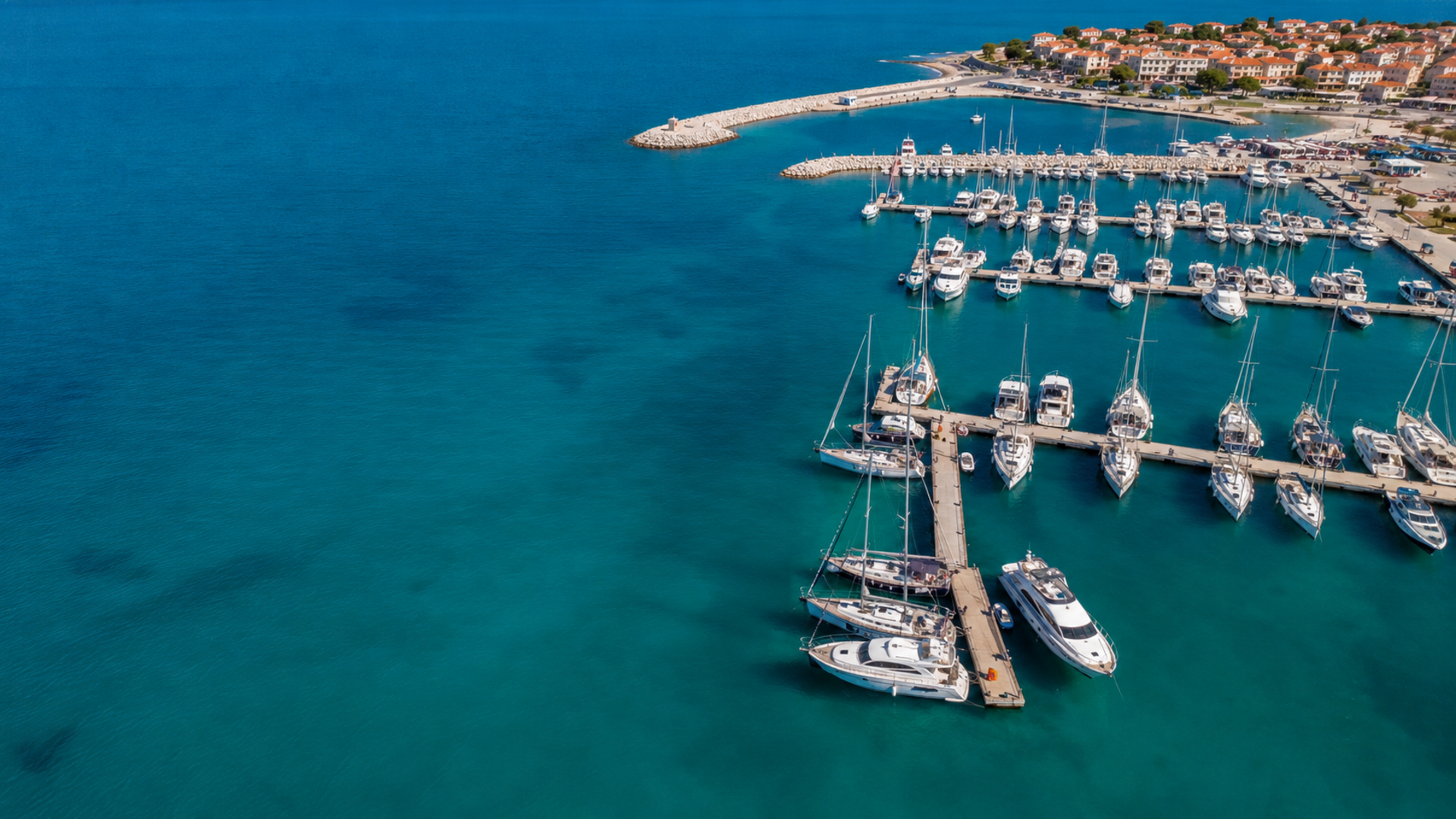
A boat owner scrolling a marina’s page is judging maintenance standard and security as much as scenery — a clean pontoon, a visible security gate, a well-run travel-lift bay reassure in a way a sunset photo alone cannot. Photography and video that show real working conditions, not just golden-hour views, are what a marina feed is judged on first.
What moves a follower to an enquiry is specificity and responsiveness. A post naming available berth lengths and draft, a caption answering the obvious pricing question, a comment reply within the day rather than the week — each signals a well-run operation. Boat owners researching a new marina often decide between two or three real options; the marina that replies fastest and shows the most convincing detail usually wins the enquiry.
This is why the discipline cannot be delegated to a generalist social media manager posting generic harbour photography on a fixed schedule. The content, cadence and reply standard that convert followers into berth enquiries and loyal tenants are specific to how marinas are actually chosen, and rarely understood outside the marina industry itself.
Local audience matters as much as visiting boat owners. Chandleries, yacht clubs, marine trades and neighbouring marinas often follow the same pages, and a channel that engages that local network with tags, shares and event content builds referral relationships that a pure booking-focused feed misses entirely.
The anatomy of a channel that fills berths, not just followers
The occupancy-winning machinery is specific to marinas. A content calendar built around real seasonal turnover — end-of-season renewal reminders, spring fit-out content, event promotion for regattas and open days — so posts arrive exactly when an owner is deciding. Aerial and dockside photography updated regularly, so the feed reflects the marina as it actually is today, not three summers ago. A reply protocol that answers berth and pricing questions within the working day. And paid boosts aimed at boat owners in the marina’s real catchment, not a broad regional audience.
Around that machinery sits the content owners actually respond to: facility upgrades documented as they happen, events and open days that bring the local boating community onto the pontoons, and tenant stories that show the marina cares about the boats it holds. This is where our digital marketing for marinas work and our social channels overlap deliberately: paid and organic pulling the same owner toward the same waiting list.
Video carries particular weight for marinas. A short walk-through of the pontoons, the fuel dock and the travel-lift in operation answers more of a prospective tenant's questions in ninety seconds than a page of text, and it is exactly the format that performs best in Instagram and Facebook feeds today.
The content engine: your real occupancy channel
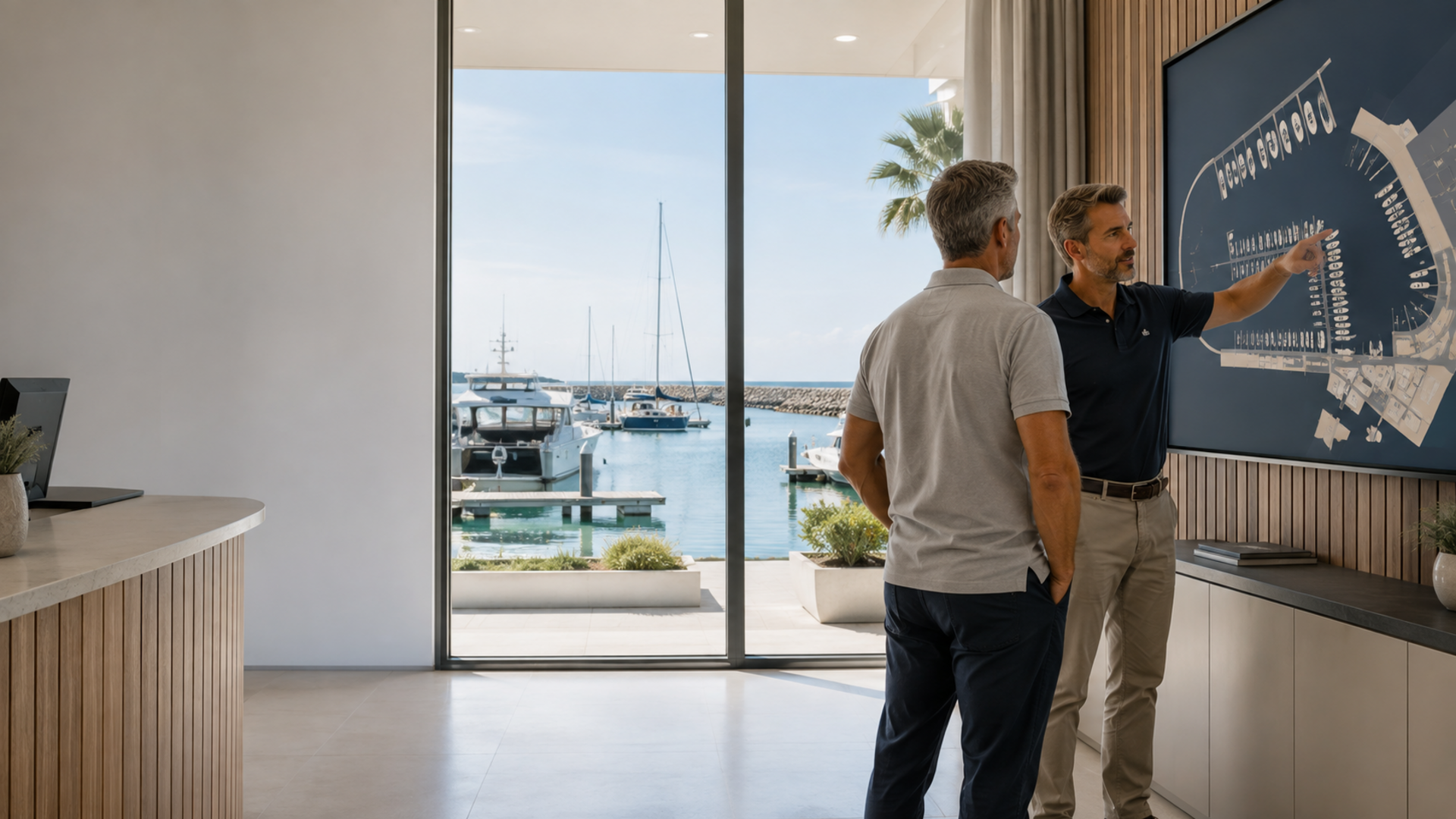
Most marinas treat social media as scenery when it is, in practice, a channel a growing share of prospective tenants check before calling — before the website, before the office visit. A programme that treats the feed as a trust-building, enquiry-generating system outperforms a page that simply posts pretty harbour photos on a schedule.
Ours is engineered around a proven anatomy: a content calendar tied to the real renewal and turnover calendar, dockside photography refreshed each season, and community management that keeps comments and the marina’s Facebook group genuinely active. Around the engine sits machinery owners never see: UTM-tagged links from bio to enquiry form, saved-reply templates for the pricing and availability questions that repeat every week, and monthly reporting that separates genuine berth enquiries from vanity engagement.
Multilingual reach matters in marinas with an international tenant base. A marina serving French, German or Scandinavian owners alongside domestic boaters that posts only in one language is quietly invisible to a real share of its own catchment; captions translated for the marina’s actual tenant mix recover enquiries a single-language feed never sees.

What better social media marketing is worth, in numbers
The commercial case for a professionally managed social media programme is not folklore; it is measured. Stanford’s web-credibility research found that around 75% of users judge a company’s credibility from its design and presentation alone — for a marina, that judgment shapes whether a prospective tenant even enquires. Google’s own research puts the first visual impression at about 50 milliseconds, and found that 53% of mobile visitors abandon pages that take longer than three seconds to load; industry conversion studies consistently price each extra second of delay at roughly 7% of conversions, a cost that applies just as much to a slow link from a social post to an enquiry form. In marina terms the arithmetic is direct: a single annual berth contract can be worth several thousand euros, so if better social media marketing for marinas fills even one additional berth a quarter, it repays the programme cost many times over within a single season.
These returns compound in a way an unmanaged feed cannot. A well-run programme keeps growing its reach and local reputation as the content calendar matures, converting a rising share of enquiries into signed contracts as the waiting list grows, while a stale feed drifts the other way as followers stop expecting anything current from it. A marina’s broader inventory extends this arithmetic further — fuel, chandlery bookings, travel-lift slots, workshop time — because a well-run feed sells every ancillary service a marina offers, not just the berth itself, so each incremental booking adds to the return on the same monthly spend without any extra production cost.
The same arithmetic works in reverse. A marina posting occasionally with no route to enquiry is not simply under-marketing, it is leaving empty berths invisible to the very owners in its own catchment who would have enquired if they had seen a current, responsive feed.
What an MMI project includes
One accountable programme for marinas: channel strategy and a content calendar tied to the real renewal and turnover calendar; aerial and dockside photography direction; community management and reply protocols; paid targeting to the marina’s real catchment; and monthly reporting tied to enquiries and waitlist adds, not just likes. Programme build starts from €4,500 with management typically €1,000 to €2,500 a month, priced fixed and quoted in writing before work begins. Seasonal berth-turnover audits are included at no extra charge in the first year, so the content calendar starts from real occupancy data rather than guesswork.
After the initial build, most marinas keep us managing the channel year-round, adjusting the calendar around the renewal cycle and boosting harder ahead of known turnover windows. Read our story to see why that stewardship model exists.

Proven on our own marine platforms
We do not ask marinas to trust a portfolio in the abstract. We operate boatrentalbalearics.com, brokerbarche.com and yachtbrokersgreece.com, and our own channels compete for the same audiences yours do. When we specify a content cadence or a reply protocol in a client account, it is the version that filled our own waiting lists after the losing versions cost us real enquiries. Standards and market context come from the industry bodies we follow — ICOMIA, British Marine and the European Boating Industry — not generic marketing folklore.
That operating experience is also why our scopes are precise: we know which content formats actually fill berths for a given marina size and catchment, which posts produce enquiries rather than likes, and we quote every proposal itemised against outcomes rather than deliverable jargon. We also draw on the wider marine ecosystem we operate in — yacht brokers, charter companies and surveyors who work alongside marinas every week — so our content recommendations account for how a marina’s social presence intersects with the brokers and charter operators bringing boats through its gates.