Shipyard website design decides, long before a project manager or private owner ever calls, whether your yard looks capable of a serious refit or a new build. A buyer comparing three yards for a six-figure project judges craftsmanship, discipline and safety culture from your website in under a minute, and forms a first opinion before reading a single specification. Marine Marketing International designs and builds shipyard websites that pass that judgment: project galleries that read like a portfolio of finished craft, capability pages that answer the technical questions owners actually ask, and enquiry paths built for a sales cycle measured in months, not minutes. We operate marine platforms of our own — boatrentalbalearics.com, brokerbarche.com and yachtbrokersgreece.com — so every recommendation here is tested on live enquiry flow, not theorised.
Fast facts
- Shipyard website design by Marine Marketing International starts from €4,500, takes six to eight weeks, and is built on WordPress with full project-gallery and enquiry tracking.
- MMI operates its own marine platforms — boatrentalbalearics.com, brokerbarche.com and yachtbrokersgreece.com — so every recommendation is proven on live enquiry flow first.
- A shipyard website has a matter of seconds to prove capability before a buyer moves to the next tab; craftsmanship photography is the first filter owners apply.
- Every MMI shipyard build ships with sub-2.5-second load targets, schema markup, multilingual readiness and enquiry-tracked contact journeys as standard.
Why shipyard website design is its own discipline
A shipyard sells capability, not inventory. There is no product photograph to browse, only evidence — finished refits, launched hulls, a yard that looks organised in every frame — that persuades an owner or a fleet manager the next project is safe in your hands. Generic web design treats a shipyard like any local business with a contact form; shipyard website design starts from the length and value of the buying decision and works backwards from there.
The consequences are practical. The project gallery, not the homepage, is the page that closes deals, because that is where a prospective client goes to judge finished quality. Capability pages need to answer engineering questions in plain language — haul-out tonnage, berth depth, refit specialisms — because a buyer who cannot find the answer assumes the yard cannot either. And the enquiry path must suit a six-figure decision: a named contact, not a ticket number, and a response that respects how much is at stake.
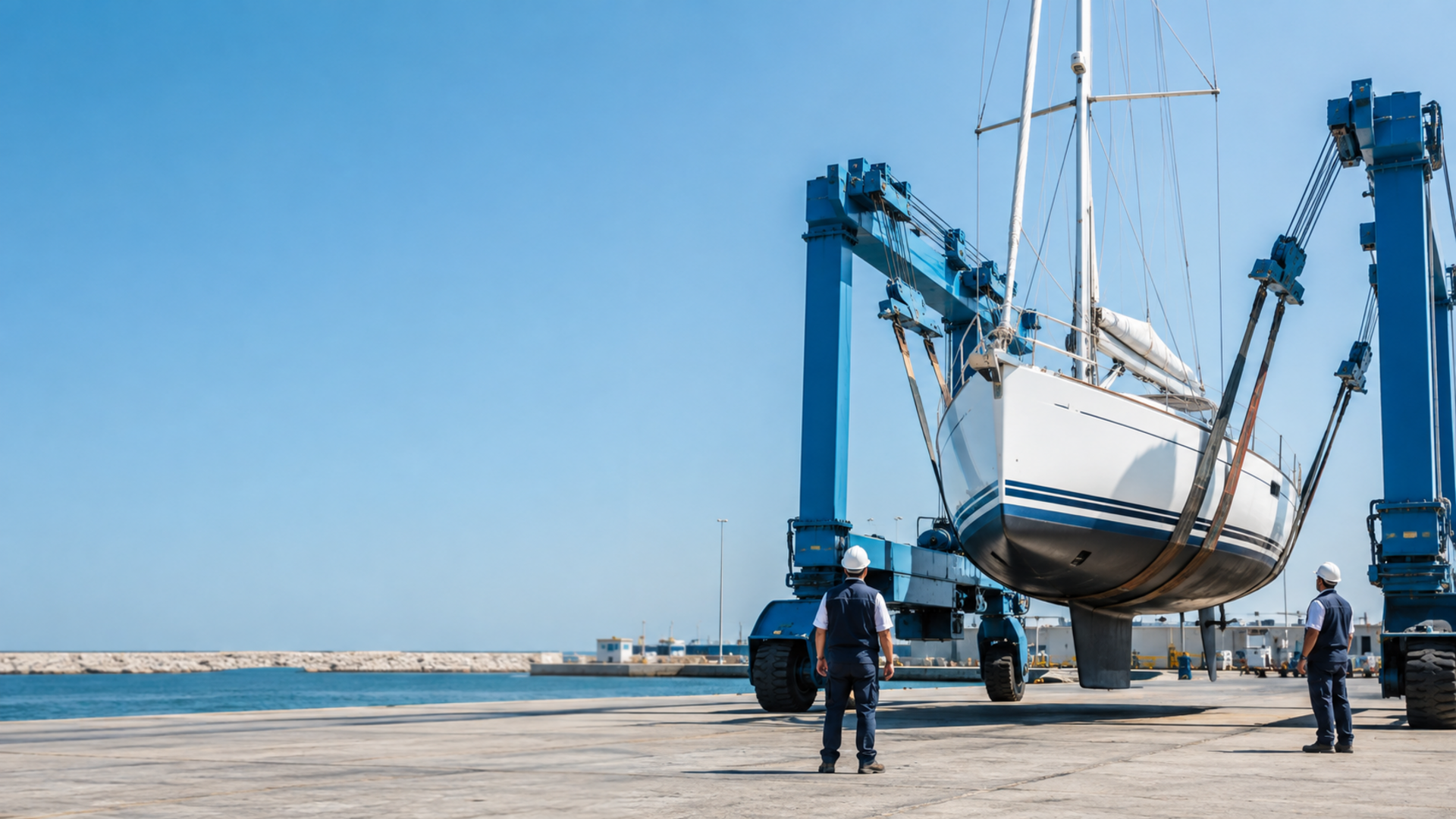
What owners and project managers judge in the first minute
Owners look for evidence the yard runs to a schedule and a standard: clean before-and-after refit photography, a capability list that matches the scale of their vessel, and a project history that proves you have handled work like theirs before. They are also judging discretion — an outdated site whispers that project management will be equally outdated.
Fleet managers and brokers judge friction differently. Can they find haul-out capacity, specialisms and lead times without a phone call, and reach a named yard manager directly? A shipyard website design that hides these facts behind a generic enquiry form loses commercial buyers who are comparing three or four yards in an afternoon and will simply move to the one that answered first.
Insurers and surveyors form a third, quieter audience. Before a large project is approved, someone beyond the owner often checks that the yard is a credible, established operation — and a professional shipyard website design, complete with certifications and a documented project history, answers that check without a single email exchange. Yards that overlook this audience sometimes lose approved work to a delay nobody explains, simply because the paperwork trail online did not match the paperwork trail on file.
This first-minute judgment is why shipyard website design cannot be delegated to a generalist template: the signals a buyer scans for — the finished-project gallery, the capability list, the safety and certification marks — are specific to the trade and absent from most off-the-shelf designs.
The anatomy of a shipyard website that wins contracts
The contract-winning machinery is specific. A project gallery organised by work type — refit, repaint, engineering, new build — so a visitor can find their own project's twin in seconds. A capability page that states tonnage, lift capacity, berths and specialisms in plain figures instead of marketing language. Named yard managers with direct lines, because commercial buyers commission people, not departments. Certification and safety credentials displayed where a fleet manager expects to see them, and a request-a-quote path built for a considered decision rather than an impulse click.
Around that machinery sits the presentation layer: high-resolution before-and-after photography, drone footage of the yard in operation, and a layout that reads with the same discipline as the workshop itself. This is where our marine website design system earns its keep for shipyards specifically: the same cinematic standard, tuned to capability and craftsmanship.

The project gallery: your real credibility engine
Most shipyard enquiries begin with a search for a specific capability — teak deck refit, engine repower, osmosis treatment — and land directly on a project or capability page, never the homepage. That makes the project gallery the highest-stakes template in any shipyard website design project, and it earns a disproportionate share of our design effort.
Ours follow a proven anatomy: before-and-after photography first, because craftsmanship is judged visually before it is read about; a specification block naming the vessel type, tonnage and work performed, because buyers compare like-for-like; a named project manager, because commercial decisions are made person to person; and related projects beneath, so a visitor with a slightly different brief stays inside your gallery instead of searching elsewhere. Around the template sits machinery buyers never notice: schema markup so search engines can surface individual projects, compressed imagery that keeps forty photographs fast, and enquiry events that show which capabilities pull attention and which need better presentation.
The same gallery discipline extends to how projects are indexed. Each finished project on a well-built shipyard website design carries its own page, its own set of images and its own short specification — not a single long page listing every job the yard has ever done. That structure lets a specific type of work, a teak deck refit or an engine repower, be found directly by search engines and by owners scrolling on a phone, rather than buried in a gallery nobody scrolls to the bottom of.

What a better website is worth, in numbers
The commercial case for shipyard website design is not folklore; it is measured. Stanford’s web-credibility research found that around 75% of users judge a company’s credibility from its website design alone — for a shipyard, that judgment is made by owners deciding who is trusted with a six-figure refit. Google’s research puts the first visual impression at about 50 milliseconds, and found that 53% of mobile visitors abandon pages that take longer than three seconds to load; industry conversion studies consistently price each extra second of delay at roughly 7% of conversions. For a yard, the arithmetic is blunt and favourable: if a faster, more credible shipyard website design converts even one additional refit contract a year at a typical project value of €80,000 or more, it repays a €10,000 build many times over — which is why we treat speed budgets and gallery presentation as revenue engineering, not decoration.
The same arithmetic works in reverse. A yard that keeps an outdated, slow shipyard website design is not merely missing an upgrade — it is actively filtering out the buyers who compare options online first, which today is nearly everyone with a project worth commissioning. That filtering happens silently, with no bounce report to flag it, which is precisely why the cost is so often underestimated until a competitor with a sharper site starts winning the contracts that used to arrive by reputation alone.
What an MMI shipyard website design project includes
One accountable package: strategy and keyword architecture for your market; capability-page and project-gallery design; copywriting in your yard’s voice; the WordPress build with your project-logging workflow; photography direction for before-and-after sets; on-page SEO, schema and metadata; multilingual versions with translated slugs for international owners; performance tuning to hard speed budgets; enquiry tracking wired to prove which pages produce contracts; and training for your team. Projects start from €4,500 and are priced fixed, in writing, before work begins.
After launch, most yards keep us as their outsourced marketing department — publishing finished projects, running campaigns, and improving the machine monthly. Read our story to see why that stewardship model exists.

Proven on our own marine platforms
We do not ask shipyards to trust a portfolio in the abstract. We operate boatrentalbalearics.com, brokerbarche.com and yachtbrokersgreece.com, marine platforms that compete for the same visitors’ attention that yours do. When we specify a gallery layout or an enquiry journey in a client build, it is the version that won on our own platforms after the losing versions cost us real enquiries. Standards and market context come from the industry bodies we follow — ICOMIA, British Marine and European Boating Industry — not from generic marketing folklore.
That operating experience is also why our scopes are precise: we know which parts of a shipyard build produce enquiries, which produce contracts, and which merely produce invoices — and we quote every shipyard website design proposal itemised against outcomes rather than deliverable jargon. It is also why our shipyard website design clients tend to stay with us for years rather than rebuilding every few seasons: the platform is built to extend, not to be replaced.