Digital marketing for boat builders decides whether a buyer researching a new build for next season finds your model line and build process first, or discovers a competing yard's configurator before yours. A boat builder sells a considered, often semi-custom purchase with a build slot booked months or years ahead, which means the marketing has to build desire and trust across a long window, not chase a single fast sale. Marine Marketing International runs digital marketing for boat builders as a single connected system: paid and social that showcase model lines and build progress to qualified buyers, retargeting that keeps a builder visible through a long decision, and email sequences that move a prospect from brochure request to booked build slot. We operate marine platforms of our own — boatrentalbalearics.com, brokerbarche.com and yachtbrokersgreece.com — so every channel recommendation here is tested on live enquiry flow, not theorised.
Fast facts
- Digital marketing for boat builders by Marine Marketing International starts from €4,500, with monthly programmes typically €1,200 to €3,200 depending on model range and target markets.
- MMI operates its own marine platforms — boatrentalbalearics.com, brokerbarche.com and yachtbrokersgreece.com — so every channel we recommend is proven on live enquiry flow first.
- A new-build decision often runs months or years ahead of delivery; digital marketing for boat builders has to nurture that window, not chase a single fast sale.
- Every MMI digital marketing for boat builders programme ships with paid, social and email working from one shared view of model interest and build slots, not three disconnected tools.
Why digital marketing for boat builders is its own discipline
A boat builder sells a model line, not a single unit, and a buyer configuring a semi-custom build is making one of the largest purchases of their life on a delivery timeline measured in months or years. Generic small-business marketing, built for fast conversions, badly under-serves that reality. Digital marketing for boat builders has to build desire around each model, nurture a buyer through a long specification and deposit process, and keep the yard visible for as long as the decision takes.
The practical consequences follow from that timeline. Paid and social campaigns need to showcase model lines and real build progress, not generic brand messaging, because buyers are comparing specific hulls and layouts. Retargeting has to persist across a long research period, since a buyer configuring options may return to the site repeatedly before ever requesting a quote. And email nurture has to move a prospect through defined stages, from brochure download to configurator use to deposit, rather than a single automated welcome sequence.
Consider two builders with similar model ranges. The one running digital marketing for boat builders as a connected system stays visible to a buyer researching over many months, showcases build progress that builds trust in the process itself, and is still front of mind when the deposit is finally placed. The other posts occasional social updates and hopes word of mouth carries the order book, and loses considered buyers to whichever yard stayed visible and credible throughout the decision.
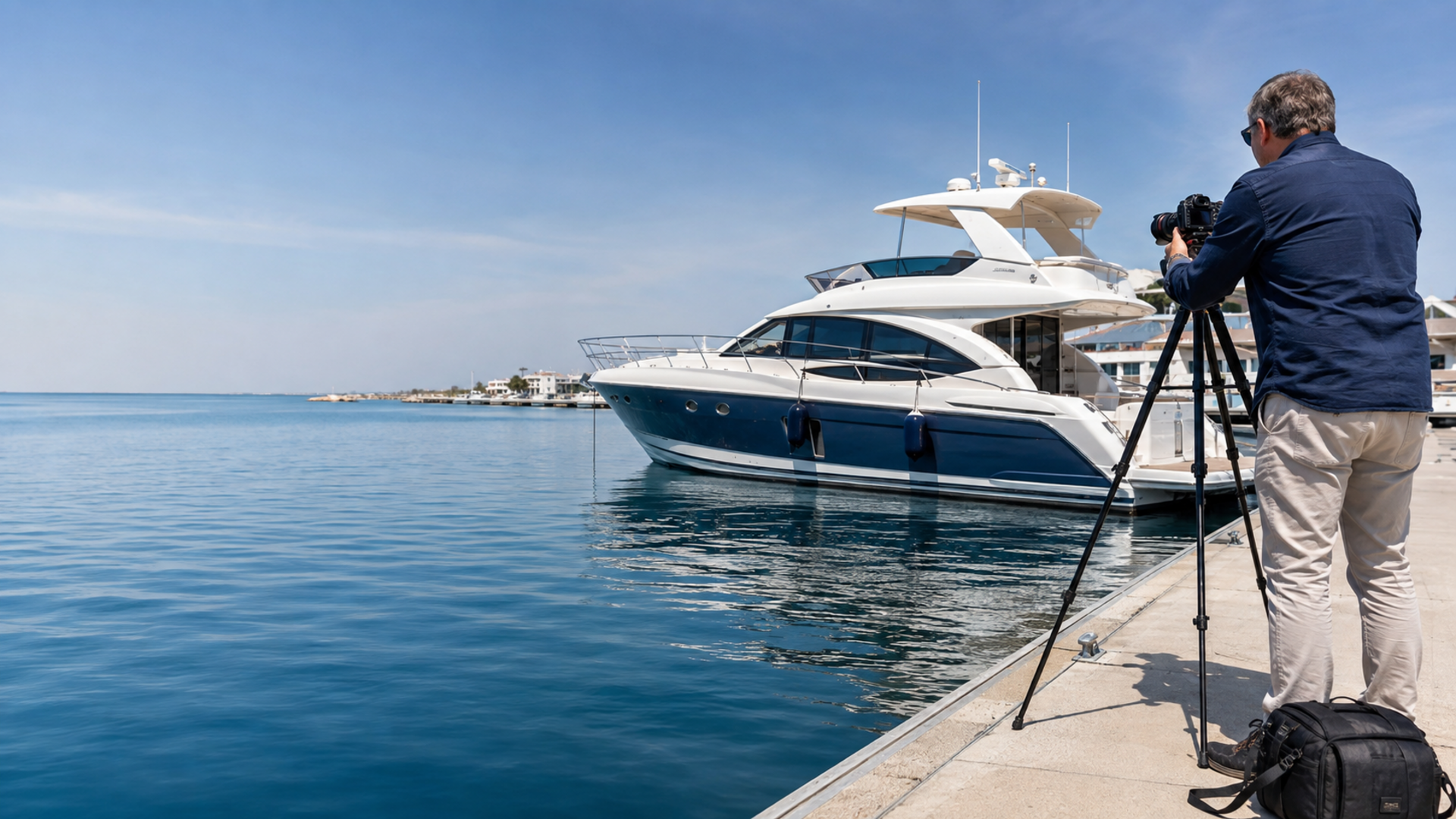
What buyers judge across a long build decision
A buyer scrolling a retargeting ad or opening a build-update email is running the same trust check as someone landing on your website cold: does the model line look current, does the build quality look consistent, and does this yard seem organised and reliable. A campaign that drives traffic to a thin, dated site wastes months of patient brand-building the moment the click lands.
Buyers deep in the configuration process judge differently again. They want to see real build progress, not stock renders, and clear communication about lead times and specification options, because a builder whose digital presence goes quiet after the deposit is the single biggest source of buyer anxiety in this category.
Both audiences are also judging responsiveness, even on a slow-moving decision. A brochure or configurator enquiry that goes unanswered for days signals the same risk a buyer is trying to screen out before committing a significant deposit. Digital marketing for boat builders that generates enquiries but ignores follow-up speed is only half finished.
The anatomy of a digital marketing programme that fills the order book
The order-book-filling machinery is specific to a long, considered purchase. Paid and social campaigns built around specific model lines and real build-progress content, refreshed regularly so the yard never looks static to a buyer researching over months. Retargeting audiences that persist for the length of a realistic decision window, segmented by the model a buyer actually viewed. Email nurture sequences that move a prospect through brochure, configurator and deposit stages, plus post-deposit build updates that keep existing buyers reassured and referring friends. And a CRM that tracks every touchpoint against a named prospect and their model interest, because a builder's pipeline is a set of high-value relationships, not a high-volume funnel.
Around that machinery sits the creative layer: high-resolution renders and real build photography, video walkthroughs of finished units, and landing pages built for a considered decision rather than an impulse click. This is where our marine website design work and our digital marketing work overlap deliberately: a builder's site built to hold up under months of scrutiny gives every channel somewhere worth sending a buyer back to.

The configurator-to-deposit funnel: your real revenue engine
Most boat-builder marketing spend is wasted chasing an immediate sale when the real revenue engine is the configurator-to-deposit funnel: the months-long process of moving a buyer from first model interest to a signed build slot. Digital marketing for boat builders that treats every channel as a stage in that funnel outperforms marketing that treats each channel as its own campaign.
Ours is engineered around a proven anatomy: paid and social introducing specific model lines to a qualified audience with real build-progress content; retargeting keeping the yard visible across the following weeks and months, segmented by the model a buyer actually viewed; email nurture that moves a prospect from brochure download through configurator use to a deposit request; and post-deposit updates that keep the relationship warm through the build itself, since a happy buyer is one of the strongest referral sources a builder has. Around the funnel sits machinery buyers never see: UTM tracking on every link, attribution that connects a signed deposit back to the campaign that started the relationship, and monthly reporting that shows which models and which channels are actually advancing buyers through the pipeline.

What better digital marketing is worth, in numbers
The commercial case for digital marketing for boat builders is not folklore; it is measured. Stanford’s web-credibility research found that around 75% of users judge a company’s credibility from its website design alone, and a buyer evaluating a new build over many months returns to that judgment repeatedly through the decision. Google’s research puts the first visual impression at about 50 milliseconds, and found that 53% of mobile visitors abandon pages that take longer than three seconds to load; industry conversion studies consistently price each extra second of delay at roughly 7% of conversions, a cost that compounds every time a nurtured buyer returns to a slow configurator page. For a builder, the arithmetic is direct: a single new-build order is typically worth a substantial six-figure sum, so if better-targeted digital marketing for boat builders wins even one additional order a year that would otherwise have gone to a more visible competitor, it repays a €4,500 campaign many times over.
These returns compound in a way a single boosted post cannot. A retargeting audience built correctly keeps the yard visible to every prospect currently comparing model lines, and an email nurture sequence keeps converting buyers who first engaged months earlier. Builders that invest in the full system find their pipeline of qualified deposits grows steadily as the connected channels mature.
The same arithmetic works in reverse. A builder running disconnected, one-off campaigns is not simply spending inefficiently, it is quietly losing considered buyers to a competitor whose paid, social and email all stay visible through the full decision window. That loss rarely shows up as a single bad month; it shows up as deposits placed with builders that were simply still visible when the decision was finally made.
What an MMI digital marketing for boat builders project includes
One accountable programme: paid and social campaigns built around model-line and build-progress content; retargeting audiences segmented by model interest and persisted for a realistic decision window; staged email nurture from brochure to deposit; post-deposit update sequences; CRM and UTM tracking tying every enquiry to its source; and monthly reporting tied to qualified enquiries and deposits, not impressions. Projects start from €4,500 and are priced fixed, in writing, before work begins.
After the initial build, most builders keep us running the channels monthly, refreshing model and build content as new units progress and tightening targeting as the pipeline data accumulates. Read our story to see why that stewardship model exists.

Proven on our own marine platforms
We do not ask builders to trust a portfolio in the abstract. We operate boatrentalbalearics.com, brokerbarche.com and yachtbrokersgreece.com, and our own enquiry pipelines compete for the same considered, high-value decisions yours do. When we specify a nurture sequence or a retargeting structure in a client programme, it is the version that won on our own platforms after the losing versions cost us real enquiries. Standards and market context come from the industry bodies we follow — ICOMIA, NMMA and European Boating Industry — not generic marketing folklore.
That operating experience is also why our scopes are precise: we know which channels actually advance a builder's long pipeline, which build the desire and trust that closes six-figure deposits, and which are merely activity, and we quote every proposal itemised against outcomes rather than deliverable jargon. We track every enquiry back to the channel and model interest that produced it, so the reporting we send is a record of pipeline movement, not a list of posts published.