Design di siti web per broker di yacht decide, in silenzio e con anticipo, a quale broker un venditore affida il proprio incarico e quali inserzioni un acquirente sceglie di fidarsi. Prima che chiunque vi chiami, ha già confrontato il vostro sito web con ogni concorrerente sul mercato — e lo ha fatto in circa novanta secondi, da uno smartphone, confrontando il modo in cui i vostri yacht sono presentati con quello dei grandi marchi. Marine Marketing International progetta e realizza siti web di brokerage che superano questo giudizio: una presentazione editoriale che valorizza ogni yacht, una struttura capace di conquistare i mandati dei venditori e basi SEO che mettono il vostro nome davanti agli acquirenti mesi prima della stretta di mano. Gestiamo in prima persona piattaforme di brokerage, quindi tutto ciò che leggete in questa pagina è frutto di esperienza pratica e non di teoria.
In breve
- Il design di siti web per broker di yacht di Marine Marketing International parte da 4.500 €, richiede da sei a otto settimane ed è realizzato su WordPress con presentazione completa degli annunci e monitoraggio delle richieste.
- MMI gestisce le proprie piattaforme di brokeraggio — yachtbrokersgreece.com e brokerbarche.com — quindi ogni raccomandazione viene prima testata sui nostri annunci.
- Un sito web di intermediazione ha circa novanta secondi per convincere un armatore che il suo yacht sarà presentato adeguatamente; la qualità della presentazione è il primo filtro applicato dai venditori.
- Ogni brokeraggio MMI viene fornito con obiettivi di caricamento inferiori a 2,5 secondi, markup dello schema, prontezza multilingue e percorsi di richiesta incentrati sulle istruzioni come standard.
Perché il design del sito web di un broker di yacht è una disciplina a sé stante
Un'agenzia di brokeraggio vende due volte. Prima deve vendere sé stessa all'armatore decidendo chi si aggiudica il mandato centrale; poi deve vendere lo yacht a un acquirente che potrebbe confrontare quaranta scafi simili su sei siti web. Un web design generico non serve a nessuna delle due vendite, perché tratta il sito come una brochure anziché come una vetrina la cui merce cambia settimanalmente e i cui clienti arrivano diffidenti. Il design di un sito web per broker di yacht parte da queste due vendite e procede a ritroso.
Le conseguenze sono pratiche. La pagina dell'annuncio, non la homepage, è il vostro modello più importante, perché è lì che gli acquirenti arrivano dalla ricerca e dai portali. Lo standard fotografico deve essere imposto dal design, in modo che un servizio mediocre non penalizzi l'intera casa. Le pagine rivolte ai venditori hanno bisogno di un proprio percorso — valutazione, promessa di marketing, galleria dei venduti — perché dare un incarico a un'agenzia è una decisione diversa dall'acquistare una barca. E ogni pagina deve caricarsi rapidamente su un pontile del porto turistico, dove i vostri clienti effettivamente navigano.

Cosa giudicano venditori e acquirenti nel primo minuto
I venditori cercano la prova che il loro yacht sarà presentato al suo reale valore: fotografia a piena pagina, testi onesti ma lusinghieri, tabelle delle specifiche pulite e una sezione delle vendite effettuate che dimostri che muovete barche come la loro. Valutano anche la discrezione e la professionalità: un sito web obsoleto suggerisce che anche la promozione del loro yacht sarà obsoleta.
Gli acquirenti giudicano la frizione. Possono filtrare ciò che vogliono in due tocchi, vedere le condizioni reali della barca e raggiungere un essere umano senza l'obbligo di registrazione? Ogni passaggio aggiuntivo tra l'interesse e la richiesta costa una percentuale di richieste, e nel settore dell'intermediazione una singola richiesta persa può tradursi in una vendita a sei cifre. I nostri design eliminano quei passaggi: azioni di richiesta persistenti, WhatsApp dove vivono gli acquirenti e pagine di annunci che rispondono alle prime dieci domande prima ancora che vengano poste.
Questo giudizio di un sol minuto è il motivo per cui il design di un sito web per broker di yacht non può essere delegato a un modello generalista: i novanta secondi vengono spesi su segnali specifici del settore dell'intermediazione — la galleria delle vendite, lo standard delle schede, gli stemmi delle associazioni — che i design generici non includono nemmeno.
L'anatomia di un sito web di agenzia immobiliare che conquista incarichi
Il meccanismo che conquista gli incarichi è specifico. Un percorso “Vendi il tuo yacht” che inizia con la promessa di marketing e termina con una richiesta di valutazione a basso attrito. Una galleria di imbarcazioni vendute, organizzata per tipo di yacht, che permette a un armatore di trovare la gemella della propria barca. Profili di broker che riportano credenziali e affiliazioni ad associazioni, perché gli armatori danno incarico alle persone, non ai loghi. Un chiaro posizionamento dell'agenzia centrale che spiega perché l'esclusiva serve al venditore. Contenuti di report di mercato o di approfondimento che dimostrano la conoscenza dell'andamento dei prezzi.
Intorno a quel meccanismo si trova il livello di presentazione che gli acquirenti vedono: modelli di inserzione con layout incentrati sulla galleria, tabelle delle specifiche che risultano ben leggibili sui dispositivi mobili, spazi per video walkthrough e suggerimenti di yacht correlati che trattengono un acquirente quasi convinto all'interno del vostro inventario anziché farlo tornare su un portale. È qui che il nostro realizzazione siti web nautici system si guadagna da vivere specificamente per i broker: lo stesso standard cinematografico, calibrato sull'inventario.
Niente di tutto questo è decorazione; ogni elemento esiste perché muove una delle due vendite. Negli audit dei siti di brokeraggio vediamo le stesse assenze ancora e ancora — nessuna galleria del venduto, nessun percorso del venditore, annunci che terminano con un modulo generico — e ogni assenza è misurabile in incarichi persi. Il buon design di un sito web per broker di yacht è in gran parte la disciplina di non lasciarne fuori nessuno.
Presentazione all'altezza degli yacht
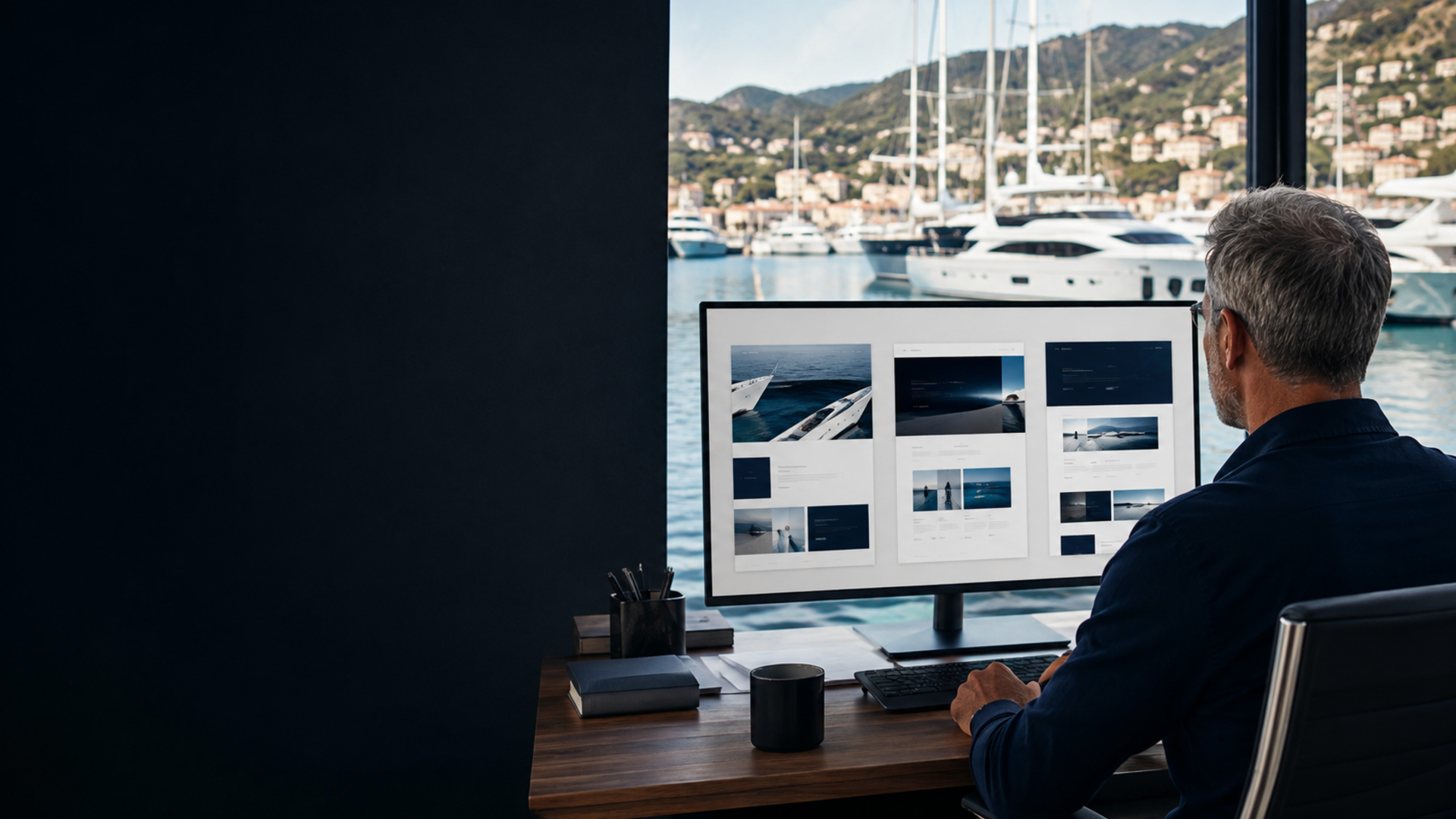
Nulla svaluta un'agenzia di intermediazione marittima più rapidamente di una presentazione visiva più economica delle sue barche. Se gli yacht sono di fascia alta, la tipografia, la direzione della fotografia e il ritmo delle pagine devono esserlo altrettanto. Curiamo la direzione artistica degli standard di presentazione in ogni progetto di siti web per broker di yacht: elenchi di scatti che i vostri fotografi dovranno seguire, trattamenti delle immagini applicati in modo coerente e regole di impaginazione che permettono a un cruiser del 2005 e a un flybridge del 2023 di convivere armoniosamente nello stesso inventario, senza che nessuno dei due sembri fuori luogo.
Anche la presentazione è onestà, gestita bene. Gli acquirenti hanno imparato a diffidare degli annunci che celano l'usura del timone e il garage del tender; un design che mostra le condizioni con sicurezza — e le inquadra — converte meglio di uno che le occulta. L'obiettivo è semplice: un armatore dovrebbe guardare qualsiasi annuncio sul vostro sito e pensare, è così che voglio che venga mostrato il mio yacht.
La pagina dell'elenco: la tua vera homepage
Most brokerage traffic never sees your homepage. Buyers arrive sideways — from a portal link, a Google result for a model, a shared WhatsApp message — and land directly on a listing. That makes the listing template the highest-stakes deliverable in any yacht broker website design project, and it is where we spend a disproportionate share of design effort.
Ours follow a proven anatomy: gallery first, because buyers decide emotionally before they read; a specification table engineered for phones, because that is where comparisons happen; price and location answered immediately, because hiding them costs trust; a named broker with a face and a direct line, because people enquire to people; and related yachts beneath, so a near-miss keeps the buyer in your inventory rather than back on the portal. Around the template sits the machinery buyers never notice: schema markup so search engines list the yacht with price and image, image compression that keeps forty photographs fast, and enquiry events that tell you which yachts pull attention and which need better presentation.
The test we hold every listing template to is blunt: would a serious buyer, comparing this yacht across four brokerage sites, feel this presentation is the most professional of the four? When the answer is yes, instructions follow — because sellers run exactly the same comparison.
SEO for brokers: owning your market before the portals do
Portals will always outrank you for the generic searches — but the searches that matter most are winnable: your brand name, your marina and region, the builders and models you specialise in, and the seller-side searches like how to sell a yacht in your market. A yacht broker website design that bakes in this architecture from day one gives every future listing and article a place to accumulate authority, instead of scattering it.
We build the structure — one intent per page, clean URLs, schema for every yacht, hreflang-correct language versions for your buyer nationalities — and we connect it to the way brokers actually publish: new listings inherit optimised templates automatically, so SEO happens as a by-product of stocking the site, not as a separate chore nobody has time for.
Done this way, search visibility compounds: each sold yacht, each market note, each new listing adds weight to the same structure — the opposite of the portal treadmill, where every euro of visibility is rented.
Quanto vale un sito web migliore, in cifre
The commercial case for yacht broker website design is not folklore; it is measured. Stanford’s web-credibility research found that around 75% of users judge a company’s credibility from its website design alone — for a brokerage, that judgment is made by sellers choosing an agent. Google’s research puts the first visual impression at about 50 milliseconds, and found that 53% of mobile visitors abandon pages that take longer than three seconds to load; industry conversion studies consistently price each extra second of delay at roughly 7% of conversions. In brokerage terms the arithmetic is brutal and favourable: if a faster, more credible site converts even one additional serious buyer enquiry a month, and one additional instruction a quarter, it repays a €10,000 build many times over inside a single sales cycle — which is why we treat speed budgets and presentation standards as revenue engineering, not polish.
Cosa include un progetto di web design per un broker di yacht MMI
One accountable package: strategy and keyword architecture for your market; instruction-journey and listing-template design; copywriting in your house voice; the WordPress build with your listing workflow (manual, feed or specialist system — deep inventory integrations are scoped separately as a specialist solution); photography direction; on-page SEO, schema and metadata; multilingual versions with translated slugs; performance tuning to hard speed budgets; enquiry tracking wired to prove which pages produce instructions and which produce buyers; and training for your brokers. Projects start from €4,500 and are priced fixed, in writing, before work begins.
After launch, most brokerages keep us as their outsourced marketing department — publishing listings and insights, running campaigns, and improving the machine monthly. Read la nostra storia per scoprire perché esiste questo modello di gestione continuativa.

Proven on our own brokerage platforms
We do not ask brokers to trust a portfolio. We operate yachtbrokersgreece.com, a sales platform in the Greek market, and brokerbarche.com, an Italian brokerage directory spanning hundreds of marinas. Our own listings compete for the same buyers yours do; our own seller pages compete for the same instructions. When we specify a listing layout or an enquiry journey in a client build, it is the version that won on our platforms after the losing versions cost us real enquiries. Standards and market context come from the industry bodies we follow — MYBA, L'Associazione Mondiale dello Yachting, ICOMIA e Marina Britannica — non dal generico folklore del marketing.
That operating experience is also why our scopes are precise: we know which parts of a brokerage build produce enquiries, which produce instructions, and which merely produce invoices — and we quote accordingly, with every yacht broker website design proposal itemised against outcomes rather than deliverable jargon.