Yacht charter company website design has one job above all others: turning a dream of a week on the water into a direct booking, without an online travel agency taking a cut of the commission. Marine Marketing International designs and builds yacht charter company website design projects for fleet operators, day-charter businesses and crewed-yacht agencies across the Mediterranean. This page explains how we approach the brief, what a charter site must do that a generic booking template cannot, and what a project with us includes.
In breve
- MMI's yacht charter company website design projects start from €4,500 and are typically live in 6–8 weeks, fixed price agreed before work begins.
- Our own charter platform, boatrentalbalearics.com, generates every booking without a single third-party portal — the same architecture we build for clients.
- Charter sites we design carry sub-2.5-second load targets on 4G, because a slow availability calendar loses a guest to the next tab.
- Multilingual builds are standard: most Mediterranean charter guests search in English, German, French, Italian or Spanish.
Why yacht charter company website design must sell direct bookings
Every booking that goes through an online travel agency or brokerage portal costs a charter company fifteen to thirty per cent in commission, indefinitely, for a guest relationship the operator never fully owns. Yacht charter company website design exists to reverse that dependency: a site strong enough in design, trust and search visibility that guests book directly, at full margin, and come back next season without an intermediary in between.
That means the website has to do more than list boats. It has to answer the questions a guest silently has before they will hand over a deposit — is this operator real, is the boat as shown, what happens if the weather turns — while making the booking itself no harder than booking a hotel room. Every yacht charter company website design decision on this page is judged against that bar.
Read more about the discipline behind this on our marine website design service page, or see how the thinking plays out in practice on our own platform via our work with yacht charter companies.
The commercial upside is not theoretical. A single 30 per cent OTA commission avoided on a €5,000 weekly charter is €1,500 that stays with the operator instead of a booking platform — often more than the entire cost of the website in its first season alone. That is the return every yacht charter company website design project is built to produce.
Repeat business compounds the case further. A guest who books directly, has a good experience and receives a personal follow-up email the next spring is far more likely to rebook directly than one who booked through a portal and never received your details at all. Yacht charter company website design that captures guest information properly at the point of booking turns a one-off transaction into a multi-year relationship, which no OTA listing can do for you.
Booking systems without a raw third-party iframe
The single most common failure in charter websites is a booking engine that visibly drops the guest into a different, uglier website mid-journey — a raw iframe with different fonts, different colours and a cookie banner of its own. Yacht charter company website design treats the availability calendar as a native part of the site: styled to match, responsive on a phone, and wired so a guest never feels handed off to a third party at the exact moment they are deciding to pay.
We integrate the booking and availability systems charter operators already use, or build native availability logic when the fleet is small enough to manage directly, and we wire enquiry and deposit flows so nothing is lost between a click and a confirmed booking. WhatsApp is treated as a first-class channel, not an afterthought, because that is where most Mediterranean charter guests actually want to talk to a real person.
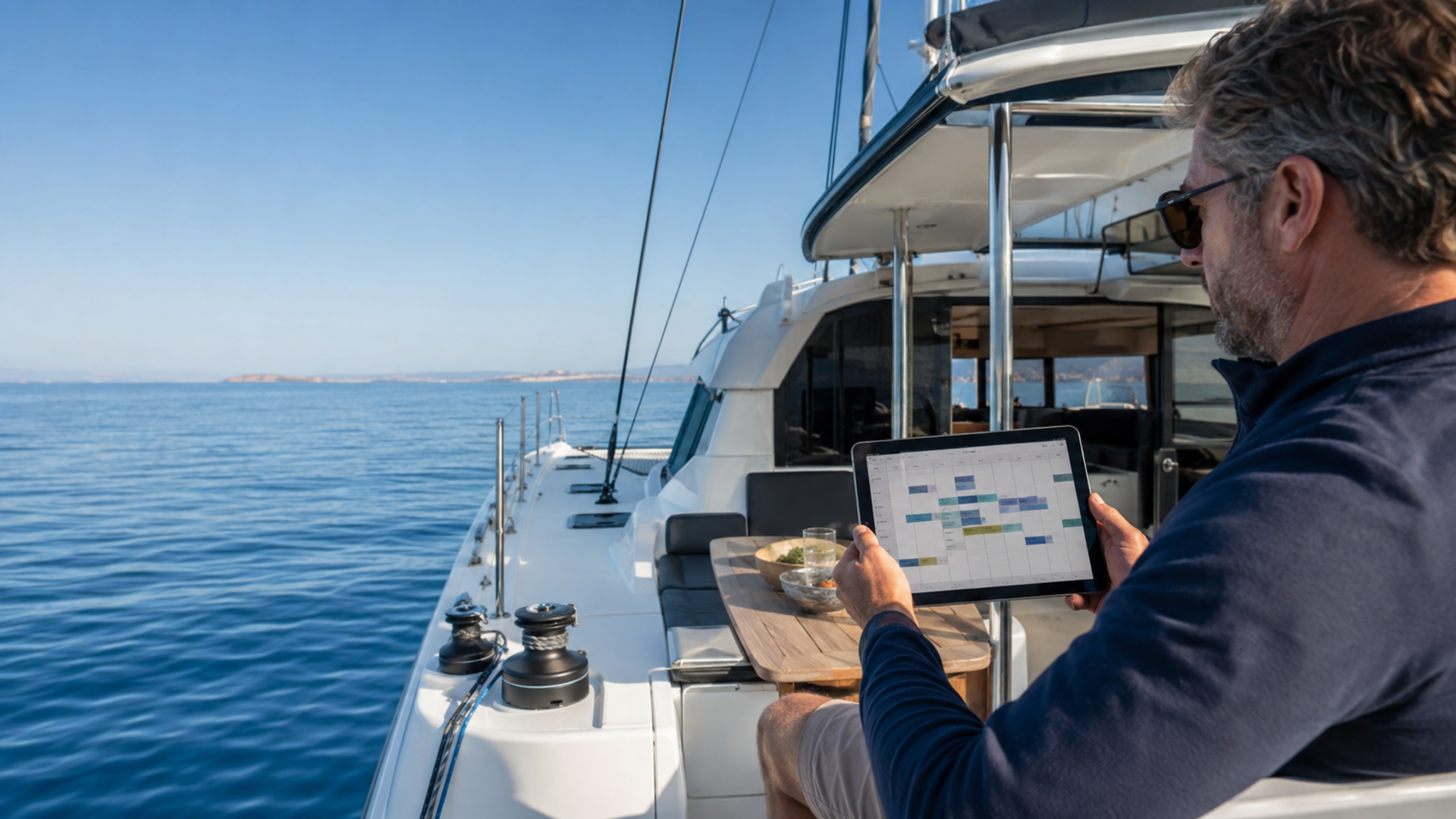
Fleet pages matter just as much as the calendar itself. Each boat gets its own page with real photography, honest specifications and clear per-week or per-day pricing, so a guest can compare options on your site instead of opening five tabs across other operators to do the comparison for you.
Design that makes the week on the water feel real
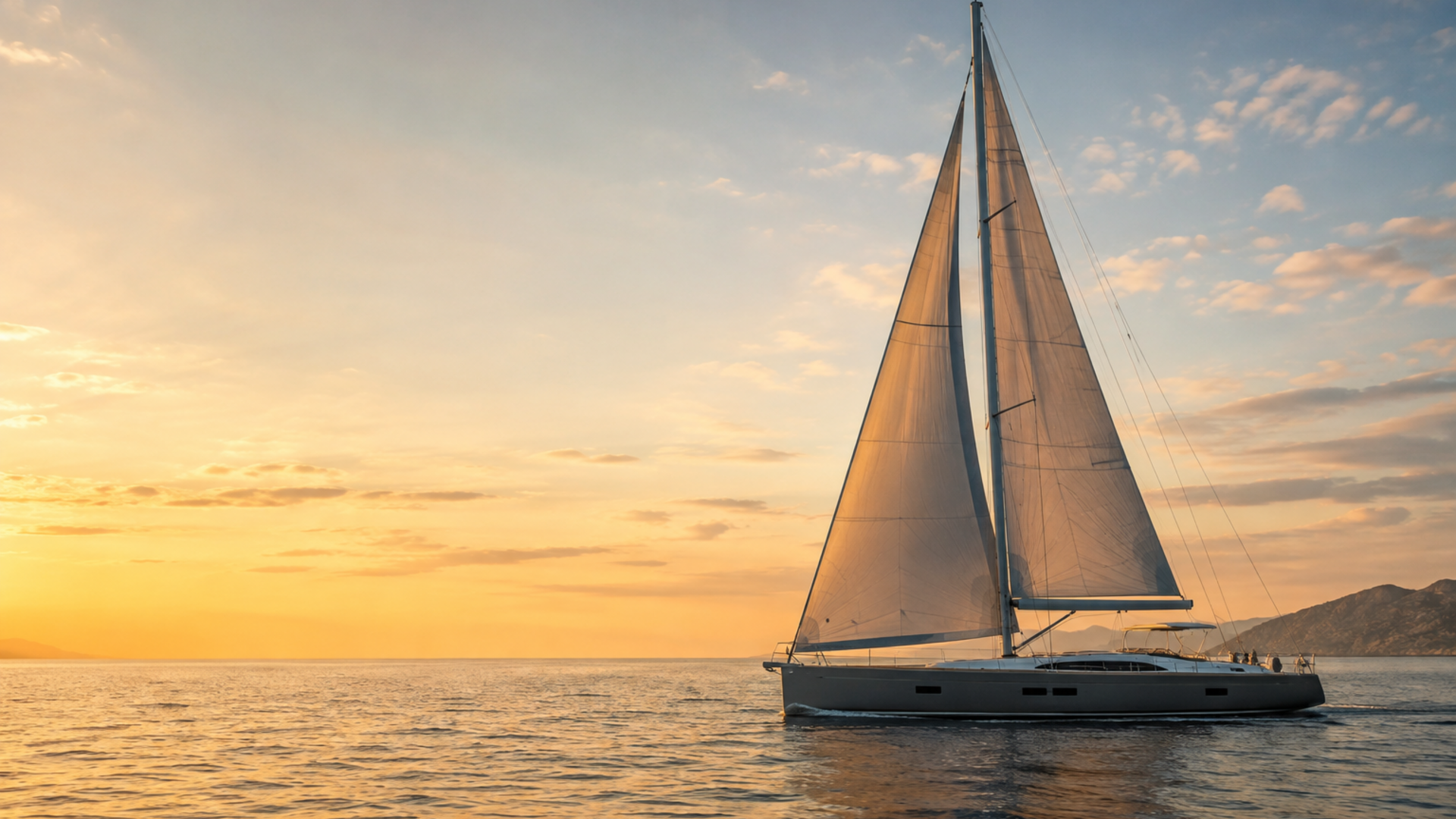
Guests do not book a boat; they book the version of themselves on deck at sunset with a drink in hand. Yacht charter company website design has to sell that feeling in the first three seconds of a visit — cinematic photography and film, generous negative space, and a colour palette drawn from the sea rather than a generic travel-booking template.
We deliberately avoid the visual habits that make charter sites look interchangeable: no stock-photo carousels of boats that are not yours, no countdown timers manufacturing urgency, no pop-ups fighting the guest before they have even scrolled. Every page is built around one question — does this make someone want the water more, and trust this operator enough to pay a deposit today?
Mobile matters more here than in almost any other sector: most charter research happens on a phone, often while a guest is already on holiday planning next year's trip. Galleries, the availability calendar and the enquiry button are all built mobile-first, not adapted afterward from a desktop design.
SEO foundations: found months before the season
Charter demand is seasonal but the research window is not: guests search for a summer charter as early as the preceding autumn. Yacht charter company website design has to be architected for that long lead time from the first wireframe — one page per search intent, a clean silo between fleet pages, destination pages and boat-type pages, schema markup on every listing, and copy written for both search engines and the AI answer engines guests now consult first when planning a trip.
Speed compounds this. A guest browsing on holiday Wi-Fi who waits four seconds for a fleet page to load simply closes the tab and tries the next operator's site, so we build to hard performance numbers — sub-2.5-second largest contentful paint, modern image formats, host-tuned caching — on every page, not just the homepage.
Destination and boat-type pages do real work here too. A guest searching "catamaran charter Ibiza" is a different intent from "sailing yacht charter Mallorca", and a yacht charter company website design that treats those as the same page loses both rankings to competitors who split them properly.
Trust signals: safety, reviews and real boats
A charter booking is paid in full before the guest ever sees the boat in person, so trust has to be earned entirely on the page. That means real photography of the actual boats in the fleet, honest safety and licensing information, clear cancellation and weather policies, and contact paths that work one-handed from a phone on a beach.
We also design against the standards the wider industry recognises. Charter credibility is reinforced by association with bodies such as British Marine, ICOMIA e la National Marine Manufacturers Association, and a well-built yacht charter company website design gives those affiliations, plus real licensing and insurance details, proper visual weight rather than burying them in a footer.
Reviews matter, but only genuine ones: we integrate and display real guest reviews from the platforms your bookings already generate them on, rather than fabricating testimonials, because a single suspicious review block does more damage to trust than having none at all.
Weather and cancellation policy pages do quiet but real work too. A guest who can find a clear, honestly written answer to "what happens if it's too windy to sail" before they book trusts the operator more, not less, for having addressed it — and a yacht charter company website design that hides this information until after payment invites disputes it could have prevented for the cost of one well-written page.
How a charter website project runs, week by week
Every yacht charter company website design project follows the same disciplined sequence, regardless of fleet size. Week one is strategy: keyword architecture, sitemap and a review of the current fleet and booking data. Weeks two and three are design and copywriting, built around real boats rather than placeholder photography. Weeks four and five are build and integration — availability calendar, CRM, payment or deposit flow. The final week is testing, speed tuning and a launch checklist before the site goes live.
You see working pages from week two onward, not a single reveal at the end, and nothing goes live without your sign-off. For operators with multiple boats or an existing booking system to integrate, we add a scoping week up front so the build is priced accurately rather than estimated.

Launch is not the end of the relationship. We hand over a short admin guide so operators can update pricing and availability themselves, and we stay available through the first weeks of the booking season — because a yacht charter company website design project measured only by a launch date, and not by what happens during the first real season, is optimised for the wrong outcome.