Création de site web pour marinas a une mission plus ciblée que la plupart des sites web du secteur nautique, et plus difficile : convertir la recherche d'une place de port par un propriétaire de bateau en une demande de réservation, sur un marché où la plupart des marinas concurrentes fonctionnent encore avec un numéro de téléphone et une grille tarifaire au format PDF. Marine Marketing International conçoit et réalise des projets de sites web pour les marinas, les yatch clubs et les gestionnaires de postes d'amarrage à travers la Méditerranée. Cette page explique notre approche du cahier des charges, ce qu'un site de marina doit accomplir qu'un modèle d'hospitalité générique ne peut pas faire, et ce que comprend un projet avec nous.
En bref
- Les projets de conception de sites Web de marina de MMI commencent à partir de 4 500 € et sont généralement en ligne en 5 à 7 semaines, avec un prix fixe convenu avant le début des travaux.
- Les demandes de places de port se convertissent grâce à la clarté, pas à la décoration : les propriétaires de bateaux veulent d'abord connaître la profondeur, les limites de longueur hors tout et le prix.
- Les sites de marinas que nous concevons visent un temps de chargement inférieur à 2,5 secondes sur la 4G, car un propriétaire qui compare trois marinas attend rarement qu'une page lente se charge.
- Le référencement local est intégré dès le premier jour : la plupart des recherches de places de port incluent un nom de lieu, et la plupart des marinas se classent encore uniquement sur leur nom.
Pourquoi la conception d'un site web de marina doit vendre des postes d'amarrage, pas seulement une marque
Une marina vend deux choses très différentes par le biais du même site web : des contrats d'amarrage à long terme pour des propriétaires qui planifient une saison ou une décennie, et des places de port pour la nuit ou de transit pour les capitaines de passage qui décident en quelques minutes, souvent depuis le large. La conception du site web d'une marina doit servir ces deux publics sans compromettre l'un ni l'autre : un outil de recherche de places calme et riche en informations pour le premier, et une vérification de la disponibilité rapide et adaptée aux mobiles pour le second.
La plupart des sites web de marinas échouent à cela simplement en étant trop vagues. Une page qui indique " contactez-nous pour connaître la disponibilité des amarrages " sans préciser la profondeur, les limites de longueur hors tout ou un prix indicatif demande à un propriétaire de bateau de faire un travail que le site web aurait dû faire pour lui. Chaque décision de conception du site web de la marina sur cette page existe pour éliminer cette friction, car la marina qui répond la première à ces questions remporte généralement la demande.
En savoir plus sur la discipline derrière cela sur notre service de création de sites web marins, ou voir comment la même approche s'applique à un secteur connexe dans notre travail avec entreprises de location de yachts.
L'écart concurrentiel est réel et exploitable. La plupart des marinas de Méditerranée fonctionnent encore avec un site web créé il y a dix ans, doté d'une grille tarifaire statique en PDF et d'un formulaire de contact qui reste sans réponse pendant des jours. Un site web de marina conçu selon des normes modernes n'a pas besoin de surpasser tous ses concurrents en matière de marketing ; il lui suffit de répondre à la question des amarrages plus rapidement que la marina située plus loin sur la côte.
Les listes d'attente constituent un angle mort particulier. De nombreuses marinas dont les places sont réellement complètes perdent tout de même de la valeur en cachant cette réalité derrière un formulaire de contact générique, alors qu'une page de liste d'attente claire avec une estimation honnête des délais convertit bien mieux que le silence — les propriétaires préfèrent rejoindre une vraie file d'attente plutôt que de deviner si leur demande a seulement été reçue. La conception de sites Web de marinas qui traite une liste d'attente comme une fonctionnalité et non comme un embarras permet de maintenir le flux des futurs emplacements.
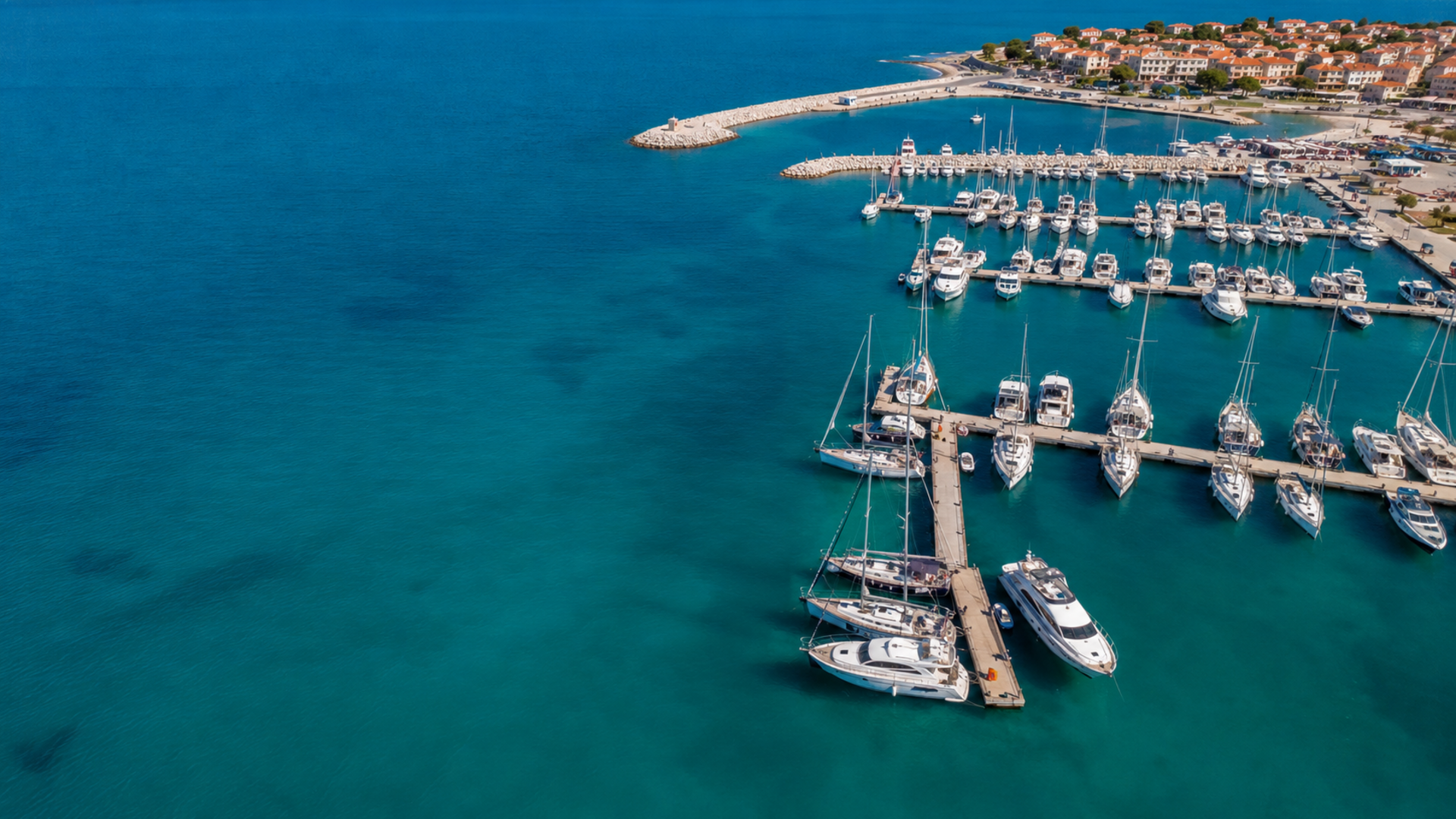
Disponibilité des postes d'amarrage sans processus exclusivement téléphonique
La plupart des ports de plaisance gèrent encore les demandes de place de port entièrement par téléphone ou par e-mail, ce qui signifie que chaque demande en dehors des heures de bureau est perdue jusqu'au jour ouvrable suivant. La conception des sites web des marinas traite les informations relatives aux places de port comme des données structurées directement sur la page — profondeur, limites de longueur hors tout (LOA) et de largeur (baux), électricité et eau, tarification indicative par longueur de bateau — afin qu'un propriétaire puisse s'auto-qualifier avant même d'entrer en contact, et que la marina ne traite que les demandes qui correspondent déjà véritablement à ses capacités.
Là où une marina utilise un système de gestion des places en temps réel, nous l'intégrons directement afin que la disponibilité s'affiche sur le site plutôt que derrière un appel téléphonique. Là où un tel système n'existe pas, nous créons un formulaire de demande clair et structuré qui recueille en une seule étape la longueur du bateau, le tirant d'eau et les dates, de sorte que le personnel reçoive une demande exploitable au lieu d'un message vague à décoder.
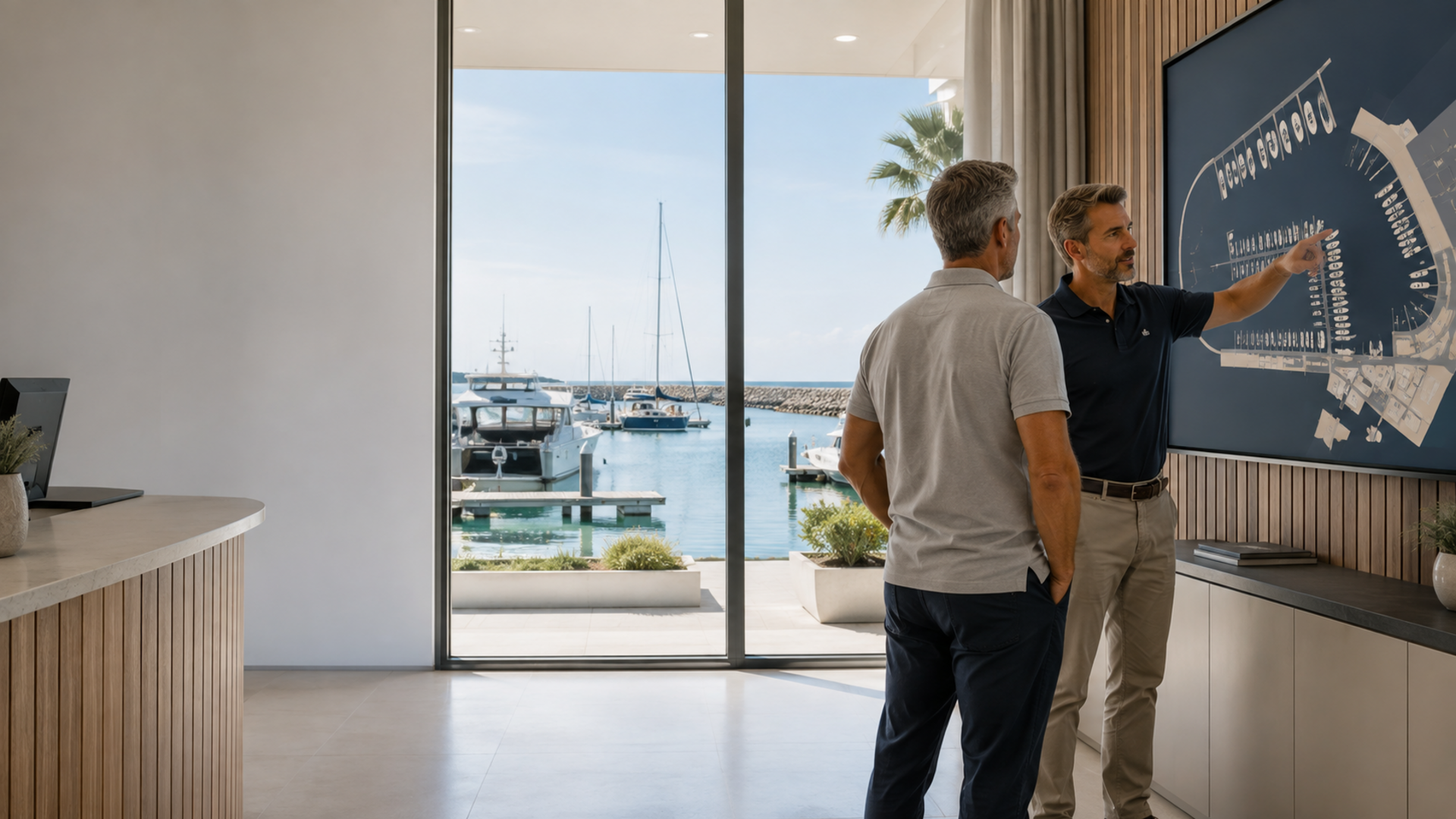
Les postes d'amarrage pour visiteurs et en transit ont besoin d'une voie rapide dédiée, distincte des demandes de permis de longue durée : un skipper arrivant du large souhaite obtenir en un clic le prix et la disponibilité pour ce soir, et non un formulaire de permis de longue durée conçu pour quelqu'un qui planifie sa saison à l'avance.
La tarification saisonnière mérite la même clarté. Là où les tarifs changent entre haute et basse saison, ou varient selon la longueur et la largeur du bateau, la conception du site web de la marina présente cette structure clairement sur la page plutôt que d'obliger chaque demande à poser la question " combien " avant de pouvoir aborder quoi que ce soit d'autre — les marinas qui publient de vrais chiffres surpassent systématiquement celles qui insistent pour un appel téléphonique en premier.
Un design qui inspire le professionnalisme aux propriétaires et aux visiteurs
Les propriétaires de bateaux jugent le professionnalisme d'une marina à travers son site web avant même de voir les pontons, et un site daté ou encombré suggère implicitement une marina datée ou encombrée, que ce soit vrai ou non. La conception d'un site web de marina doit renvoyer une image de calme et de bonne gestion : des photographies nettes des installations réelles, une navigation claire entre l'amarrage, les services et les informations locales, ainsi des mises en page qui placent les questions pratiques au premier plan plutôt que de les enfouir sous le récit de la marque.
Nous évitons délibérément les habitudes visuelles qui font paraître les sites de marina interchangeables : pas de photos de stock génériques de bateaux qui ne sont pas dans cette marina, pas de textes vagues sur des "installations de classe mondiale" sans précisions, pas de navigation qui cache les tarifs à trois clics de profondeur. Chaque page est construite autour d'une question : un propriétaire de bateau comparant trois marinas choisirait-il de faire une demande ici en premier ?
Fondamentaux du référencement : être trouvé par les propriétaires cherchant une place de port
Les recherches de places de port sont presque toujours locales : " disponibilités anneaux marina Palma " ou " amodiation annuelle Alicante " plutôt qu'un terme générique de l'industrie. La conception de sites Web de marinas doit être pensée autour de cela dès le premier wireframe — des pages spécifiques à un emplacement, un balisage de schéma qui indique les coordonnées exactes et les installations de la marina, et un texte rédigé à la fois pour les moteurs de recherche et les moteurs de réponse par IA que les propriétaires de bateaux consultent désormais lors d'un changement de port.
La vitesse et la clarté comptent toutes deux pour le référencement ici. Un site de marina qui met quatre secondes à afficher ses tarifs perd la comparaison face à un concurrent plus rapide avant même qu'un humain ne juge le contenu, nous concevons donc en fonction d'objectifs de performance stricts — un affichage du plus grand élément (LCP) inférieur à 2,5 secondes, des formats d'image modernes, une mise en cache optimisée par l'hébergeur — sur chaque page, et pas seulement sur la page d'accueil.
La plupart des marinas se classent encore uniquement sur leur propre nom, laissant chaque recherche générique de type " marina près de chez moi " ou " poste d'amarrage à vendre [lieu] " à un site d'annuaires. Un site web de marina correctement conçu comble cette lacune en s'appropriant les pages sur lesquelles un annuaire se positionnerait autrement.
Signes de confiance : installations, sécurité et crédibilité locale
Un propriétaire qui s'engage pour un contrat de location de saison ou à l'année confie la sécurité de son bateau à une marina, et pas seulement son stationnement. Cette confiance doit se mériter sur papier : des informations claires sur la sécurité et la vidéosurveillance, de vraies photographies des pontons et des installations, des détails sur la protection contre le vent et la houle, et des informations honnêtes sur les listes d'attente plutôt que de vagues promesses de disponibilité.
Nous concevons également selon les normes reconnues par l'ensemble de l'industrie. La crédibilité de Marina est renforcée par son association avec des organismes tels que ICOMIA, Marine britannique et Industrie Nautique Européenne, et un site web de marina bien conçu accorde le poids visuel adéquat au label Pavillon Bleu, aux certifications et aux partenariats locaux au lieu de les enfouir dans un pied de page.
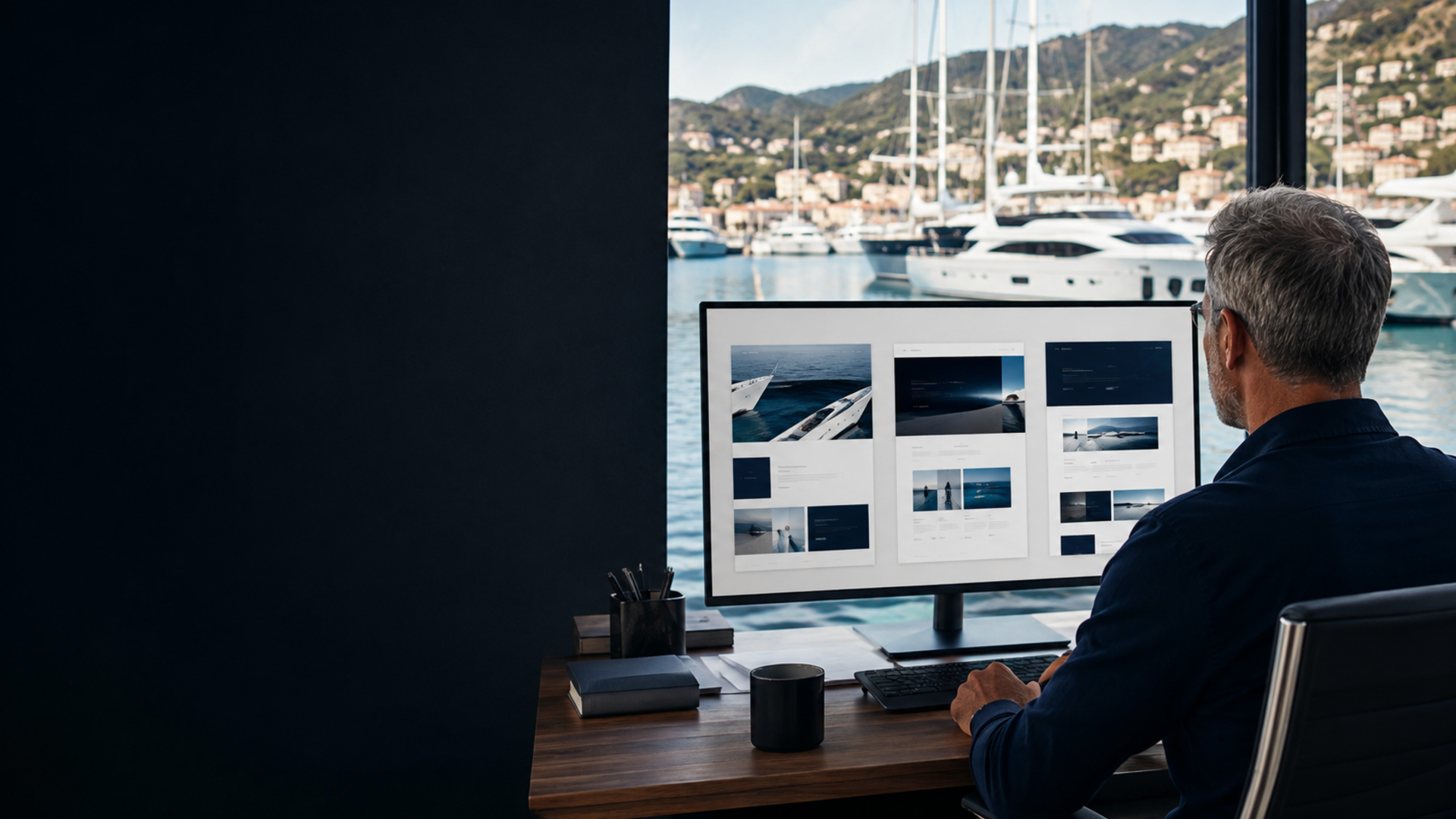
Les informations locales comptent plus que la plupart des marinas ne le réalisent : la proximité des shipchandlers, des chantiers navals, du carburant et des aéroports est précisément ce qu'un propriétaire qui déménage recherche avant de s'engager, et la conception d'un site Web de marina qui intègre ces éléments en profondeur témoigne d'une marina qui comprend l'ensemble de l'expérience de ses clients, et pas seulement leurs amarrages.
Les qualifications du personnel ajoutent une couche de confiance plus discutable que la plupart des marinas négligent complètement. Un maître de port nommé, un véritable protocole de contact d'urgence et un engagement clairement énoncé sur le délai de réponse indiquent à un propriétaire potentiel que cette marina est gérée de manière professionnelle avant même qu'il n'ait mis les pieds sur le ponton, ce qui compte plus pour un engagement d'une saison entière que n'importe quelle photographie pittoresque à elle seule.
Comment se déroule un projet de site web de marina, semaine après semaine
Chaque projet de création de site web de marina suit la même séquence rigoureuse. La première semaine est dédiée à la stratégie : architecture des mots-clés, plan du site et analyse des données actuelles sur les amarrages et les tarifs. La deuxième semaine est consacrée au design et à la rédaction, élaborés autour des véritables installations de la marina plutôt qu'autour de photographies de banque d'images génériques. Les semaines trois et quatre concernent le développement et l'intégration : plan des amarrages, tarifs, acheminement des demandes et tout système de disponibilité en temps réel. La dernière semaine est celle des tests, de l'optimisation de la vitesse et de la vérification de la liste de contrôle avant la mise en ligne du site.
Vous voyez des pages de travail à partir de la deuxième semaine, pas de révélation unique à la fin, et rien ne sort en production sans votre accord. Pour les marinas disposant déjà d'un système en ligne de gestion des postes d'amarrage, nous ajoutons une étape de cadrage en amont afin que le travail d'intégration soit chiffré précisément plutôt qu'estimé.

Le lancement ne marque pas la fin de la relation. Nous remettons un bref guide administratif afin que le personnel de la marina puisse mettre à jour lui-même les tarifs et les disponibilités, et nous restons disponibles pendant les premières semaines de demandes en direct — car un projet de conception de site web pour marina qui se mesure uniquement à sa date de lancement, et non aux demandes qu'il génère par la suite, est optimisé pour le mauvais résultat.