Création de site web pour experts maritimes has to do something most marine websites do not: sell trust in a professional judgement before a single job has been booked, often to a buyer who will never meet the surveyor in person before the pre-purchase survey happens. Marine Marketing International designs and builds marine surveyor website design projects for independent surveyors and survey practices across the Mediterranean. This page explains how we approach the brief, what a surveyor site must do that a generic services template cannot, and what a project with us includes.
En bref
- MMI's marine surveyor website design projects start from €4,500 and are typically live in 4–6 weeks, the fastest of any sector we build for.
- Most survey instructions still come from local search or a broker's referral — both depend on the surveyor being easy to find and easy to trust online.
- Surveyor sites we design carry sub-2.5-second load targets on 4G, because a slow site undermines the precision the surveyor is selling.
- Service-area pages matter more here than almost any other sector, since most instructions are decided by location and availability first.
Why marine surveyor website design has to sell trust first
A buyer commissioning a pre-purchase survey is trusting a stranger's professional judgement on what may be their largest single purchase, usually under time pressure and often without ever meeting the surveyor face to face before the report is delivered. Marine surveyor website design exists to close that trust gap on the page itself: clear credentials, a plain explanation of what a survey actually covers, and enough evidence of competence that the buyer books with confidence rather than hesitation.
Brokers matter here just as much as buyers. A significant share of survey work arrives through broker referral, and brokers choose surveyors they can point a nervous buyer toward without reservation — which means a marine surveyor website design that looks credible to a broker's clients is doing double duty, winning both direct enquiries and referral trust at once.
Read more about the discipline behind this on our marine website design service page, or see how the same principles of trust-first design apply to a related sector in our work with yacht charter companies.
The stakes for the surveyor are real too. A missed defect on a survey can carry professional and financial consequences for years, so the website has to communicate rigour honestly rather than oversell — overclaiming on a marine surveyor website design is not just poor marketing, it sets an expectation the surveyor may not be able to meet on a difficult hull.
Timing pressure shapes almost every enquiry a surveyor receives. Purchase contracts often have a survey deadline built in, so a buyer searching at short notice is filtering as much on demonstrated availability as on qualifications alone. A marine surveyor website design that states realistic booking lead times honestly, rather than a vague "contact us", wins enquiries from buyers who cannot afford to wait for a reply that never comes.
Credentials presented so they are actually read
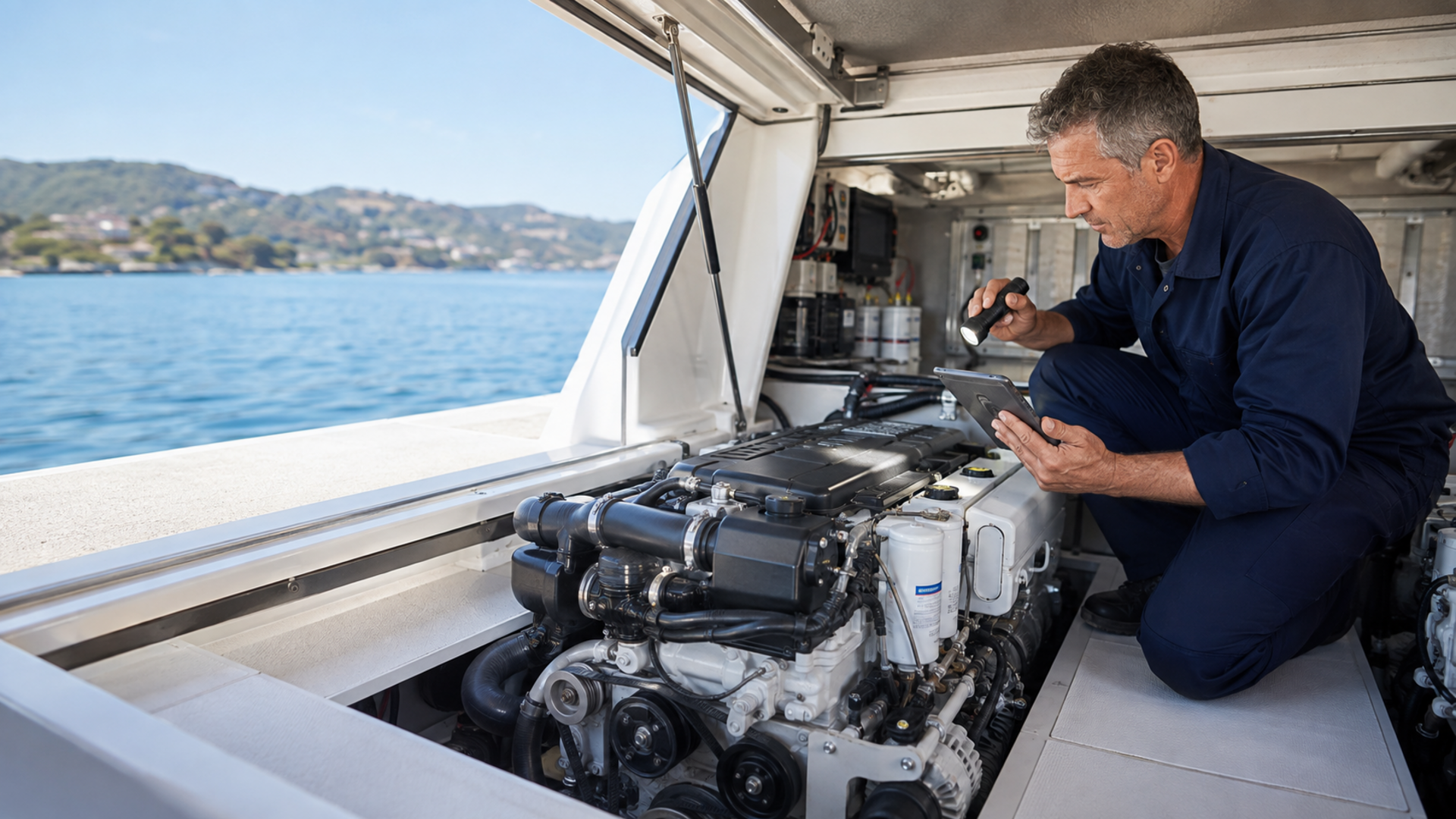
Most surveyor websites bury their credentials in a small "About" paragraph, when qualifications, memberships and years of experience are precisely what a nervous buyer is scanning for first. Marine surveyor website design puts this information where it will actually be seen — near the top of the homepage and on every service page, not filed away on a page nobody clicks.
Specialisation deserves the same visibility. A surveyor who works mainly on sailing yachts, motor yachts, or specific hull materials should say so clearly, because a buyer trying to match expertise to their exact boat will move on quickly if the site reads as generic. Naming the specialism is not a limitation; it is precisely the signal a serious buyer is looking for.
Sample reports, shown with client permission and personal details redacted, do more to build confidence than any amount of descriptive copy. A buyer who can see the structure and thoroughness of an actual report before booking arrives already convinced, which shortens the sales conversation to a scheduling question rather than a persuasion exercise.
The report-writing process itself is worth a short, plain explanation on the page: what gets inspected, how findings are categorised by severity, and how quickly the written report follows the physical survey. Buyers who understand the process in advance ask fewer anxious follow-up questions and trust the eventual report more, because nothing about it arrives as a surprise.
Design that reads as precise, not decorative
A surveyor's website should look like it was built by someone who checks details for a living. Marine surveyor website design favours clarity over decoration — clean typography, uncluttered layouts, and photography that shows real inspection work rather than generic stock imagery of boats at anchor. Precision in the design itself is a quiet argument for precision in the survey work.
We deliberately avoid the visual habits that undercut this impression: no vague "trusted by hundreds of clients" claims without evidence, no stock photography of a different boat type than the surveyor actually inspects, no cluttered homepage trying to say everything at once. Every page is built around one question — would a cautious buyer trust this surveyor's judgement after reading this page alone?
SEO foundations: found by location and availability
Survey instructions are decided almost entirely by two factors: is this surveyor available soon, and do they cover this location. Marine surveyor website design has to be architected around exactly that from the first wireframe — one page per port or region covered, schema markup that states service areas plainly, and copy written for both search engines and the AI answer engines buyers and brokers now consult when a survey is needed quickly.
Speed matters more here than the file size might suggest. A buyer under time pressure to complete a survey before a purchase deadline will not wait for a slow site to load; they will call the next name on the list. We build to hard performance numbers — sub-2.5-second largest contentful paint, modern image formats, host-tuned caching — on every page, not just the homepage.
Most independent surveyors currently rank on nothing but their own name, leaving every generic "marine surveyor [location]" search to a directory listing instead. A properly built marine surveyor website design closes that gap by owning the location pages a directory would otherwise capture.
Trust signals: reports, references and professional bodies
Beyond credentials and sample reports, a surveyor's website benefits from anything that demonstrates independence and rigour: a clearly stated professional indemnity insurance position, a plain explanation of the survey process from booking to report delivery, and honest turnaround-time expectations rather than vague promises.
We also design against the standards the wider industry recognises. Surveyor credibility is reinforced by association with bodies such as the International Institute of Marine Surveying, ICOMIA et Marine britannique, and a well-built marine surveyor website design gives professional memberships and certifications proper visual weight instead of burying them in a footer.
Broker relationships deserve their own quiet visibility too. A page listing the brokerages a surveyor regularly works with, shown with permission, reassures both direct buyers and new broker contacts that this surveyor is an established, trusted part of the local transaction ecosystem rather than an unknown quantity.
Insurance and indemnity details, while unglamorous, are among the first things a cautious buyer or their lawyer will look for. Stating professional indemnity cover plainly, rather than leaving it to be asked about, signals that the surveyor operates as a serious professional practice rather than an informal sideline — a small piece of copy that does real work in a marine surveyor website design built for trust.
How a surveyor website project runs, week by week
Every marine surveyor website design project follows the same disciplined sequence, compressed for the sector's typically smaller scope. Days one to three are strategy: keyword architecture, service-area mapping and a review of existing credentials and sample reports. Week two is design and copywriting, built around the surveyor's real specialisation rather than generic services language. Weeks three and four are build, enquiry routing and any multilingual work. The final days are testing, speed tuning and a launch checklist before the site goes live.
You see working pages from week two onward, not a single reveal at the end, and nothing goes live without your sign-off. For surveyors covering multiple regions or hull specialisations, we add a short scoping step up front so the service-area structure is right from the start.

Launch is not the end of the relationship. We hand over a short admin guide so the surveyor can add new sample reports or service areas independently, and we stay available through the first weeks of live enquiries — because a marine surveyor website design project measured only by a launch date, and not by the instructions it produces afterward, is optimised for the wrong outcome.