Social media marketing for marine equipment suppliers decides whether a boat owner searching for a specific part or system finds your listing and trusts it enough to order, or scrolls past to whichever supplier’s feed looks more current and more credible. Equipment purchases range from impulse — a replacement fitting — to considered — a full electronics upgrade — but both are won on visible proof: real product content, clear compatibility information, and evidence other boat owners trust the supplier. Marine Marketing International runs this discipline as a complete system — product and installation content that proves compatibility and quality, trade-partnership visibility with the brands you represent, and a reply protocol built for the urgency a chandlery enquiry often carries. We source equipment for a live charter fleet on boatrentalbalearics.com, so every reliability and compatibility message here is tested against our own boats, not theorised.
Fast facts
- This social media programme for marine equipment suppliers, run by Marine Marketing International, starts from €4,500 for build, with ongoing management typically €1,000 to €2,500 a month.
- MMI sources equipment for a live charter fleet on boatrentalbalearics.com, so every reliability and compatibility message is tested against real installations first.
- Equipment purchases range from impulse to considered, but both depend on visible proof: real product content, compatibility detail and trusted reviews.
- Every social media marketing programme ships with a product and installation content plan, trade-partnership visibility and monthly reporting as standard.
Why social media marketing matters for marine equipment suppliers
A boat owner searching for a part or system is usually specific and time-pressed: a broken fitting before a weekend trip, an electronics upgrade planned months ahead. Both buyers check the same signals before ordering — clear product detail, compatibility with their exact boat and systems, and evidence the supplier is reliable — and increasingly they check those signals on social media before they ever reach a website. Generic social media management, an occasional product photo, gives a buyer none of the compatibility and trust evidence they are actually screening for.
The practical consequences follow. Content needs to show real product and installation detail, not just a boxed-product shot, because a buyer comparing suppliers is checking fit and compatibility, not admiring packaging. Posts need a route to order or enquiry, not just a like. And trade partnerships need visible proof, because a buyer choosing between suppliers trusts an authorised dealer of a known brand over an unverified reseller.
Consider two suppliers with similar stock and similar pricing. The one running a structured programme converts a materially higher share of searches into orders, because every post builds the specific kind of compatibility confidence a buyer needs before purchasing marine equipment they cannot easily return. The other posts occasionally and relies on price alone, missing every buyer who researched compatibility first and found nothing convincing.
What makes a boat owner order from one supplier over another
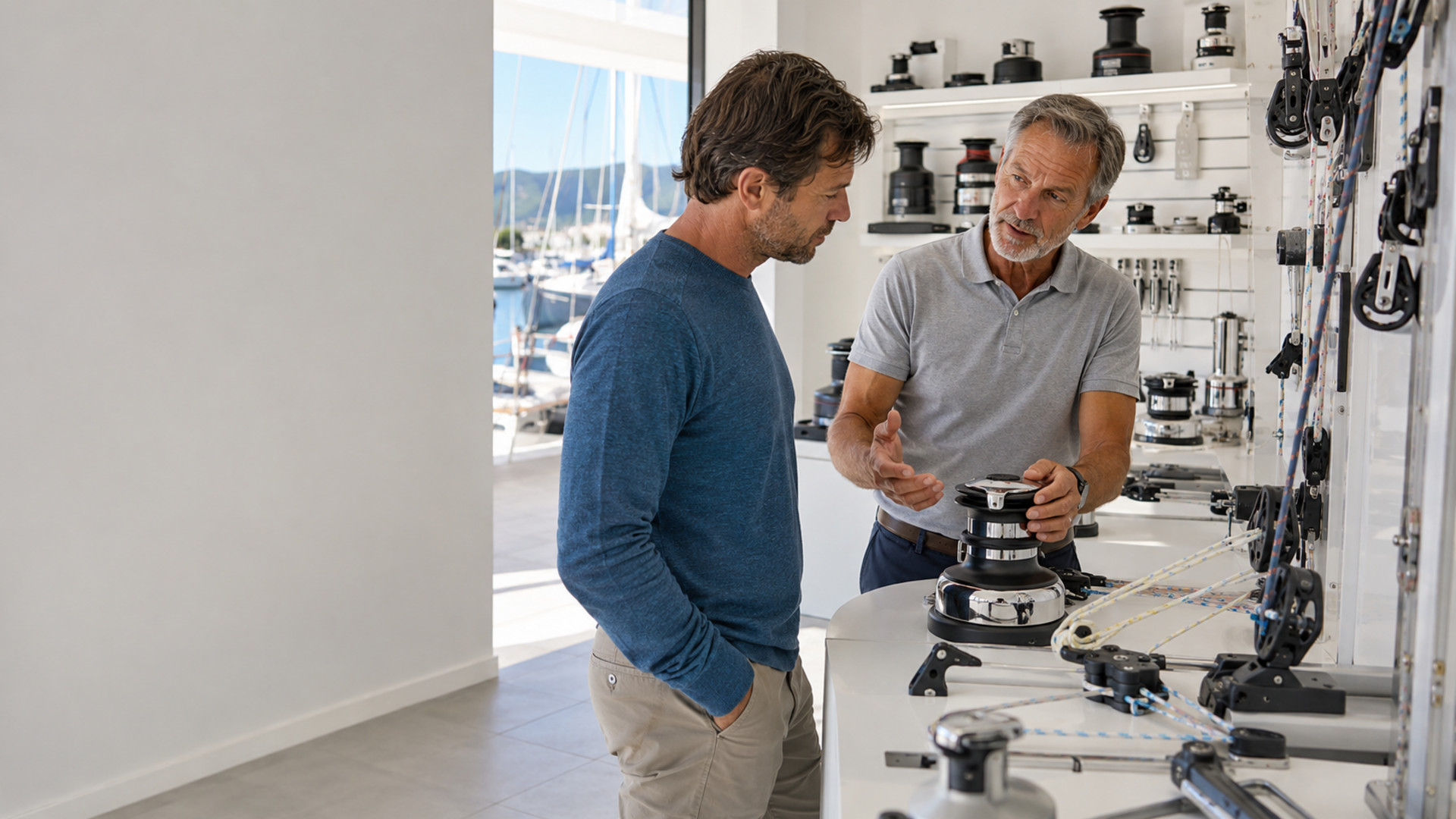
A buyer scrolling an equipment supplier’s page is judging compatibility and credibility as much as price — a clear product photo showing real fitment, a caption confirming which boats and systems a part suits, and visible brand authorisations that prove the supplier is a genuine stockist, not a reseller of uncertain stock. Photography and video of real installations, not stock manufacturer images, are what a supplier’s feed is judged on first.
What moves a browsing buyer to order is specificity and responsiveness. A post naming the exact models and systems a product fits, a caption answering the obvious “will this work on my boat” question, a reply to a DM within the working day — each signals a supplier who will actually get the order right the first time. Buyers ordering marine equipment are wary of return hassle on the water, so compatibility confidence decides the sale before price does.
This is why the discipline cannot be delegated to a generalist social media manager posting generic product photography on a fixed schedule. The content, specificity and reply speed that convert followers into orders are specific to how equipment purchase decisions are actually made, and rarely understood outside the trade itself.
Reviews and installation proof carry outsized weight in this sector. A supplier with a steady stream of real installation photos and specific reviews — not just star ratings but confirmation a part fit and performed as described — reassures a buyer in a way a manufacturer’s stock catalogue image cannot match. Cross-selling compounds this further: a buyer who trusts one well-documented installation is far more likely to return for the next part on their list, rather than starting the research over with a different supplier.
The anatomy of a channel that drives orders, not just followers
The order-winning machinery is specific to equipment suppliers. A content calendar built around real product and installation content — new arrivals, compatibility guides, installation walkthroughs — that proves fit and quality through detail, not claims. Trade-partnership and brand-authorisation content displayed prominently and kept current. A reply protocol that answers compatibility and stock questions within the working day, because most enquiries carry a real urgency. And seasonal content timed to haul-out, commissioning and boat-show seasons, when equipment demand spikes hardest.
Around that machinery sits the content buyers actually respond to: short installation videos that answer the “how hard is this to fit” question before it is asked, new-arrival content that keeps regular customers checking back, and shoppable or link-in-bio content that removes friction between interest and order. This is where our digital marketing for marine equipment suppliers work and our social channels overlap deliberately: paid and organic both proving the same compatibility to the same searching buyer.

The content engine: your real order channel
Most suppliers treat social media as brand awareness when it is, in practice, where a growing share of buyers check compatibility before ordering — before the website, before the phone call. A programme that treats the channel as a compatibility-proof engine outperforms an occasional, unplanned presence.
Ours is engineered around a proven anatomy: a product and installation content calendar refreshed with real stock, trade-partnership and brand-authorisation display kept current, and a reply protocol built for the compatibility questions that dominate enquiries. Around the engine sits machinery buyers never see: UTM-tagged links from bio to product pages, saved-reply templates for the fit and stock questions that repeat constantly, and monthly reporting that separates genuine order-driving enquiries from vanity engagement.
Seasonality drives this sector harder than most. Demand spikes sharply around spring commissioning and again before major boat shows, and a supplier that concentrates its heaviest content and paid push into those windows earns more per euro than one running a flat, always-on calendar through the quiet months, freeing up budget for the periods that actually convert.
What better social media marketing is worth, in numbers
The commercial case for a professionally managed social media programme is not folklore; it is measured. Stanford’s web-credibility research found that around 75% of users judge a company’s credibility from its design and presentation alone — for an equipment supplier, that judgment decides whether a buyer trusts a listing enough to order sight-unseen. Google’s own research puts the first visual impression at about 50 milliseconds, and found that 53% of mobile visitors abandon pages that take longer than three seconds to load; industry conversion studies consistently price each extra second of delay at roughly 7% of conversions, a cost that applies just as directly to a slow-loading product link shared from social. In supplier terms the arithmetic is direct: even modest average order values compound quickly across repeat and trade customers, so if a better-run programme wins even a handful of additional orders a week, it repays the programme cost many times over inside a single month.
These returns compound in a way an unmanaged feed cannot. A well-run programme keeps building compatibility trust as the content library matures, converting a rising share of searches into orders as installation content and reviews accumulate, while a stale feed drifts the other way as buyers default to whichever supplier looks more current and more credible. That gap widens every season a supplier leaves its channel untouched, and rarely closes once a competitor builds a larger library of trusted installation content.
The same arithmetic works in reverse. A supplier with no visible channel is not simply invisible online, it is absent from the compatibility research a growing share of buyers now do before ordering equipment they cannot easily return once fitted, and that comparison happens whether or not the supplier is part of it.
What an MMI project includes
One accountable programme for marine equipment suppliers: channel strategy and a product and installation content calendar; trade-partnership and brand-authorisation display; reply protocols for compatibility and stock questions; seasonal content timed to demand spikes; shoppable link architecture; and monthly reporting tied to orders and enquiries, not just likes. Programme build starts from €4,500 with management typically €1,000 to €2,500 a month, priced fixed and quoted in writing before work begins. First-year setup includes a seasonal content calendar mapped to your specific product mix, at no extra charge.
After the initial build, most suppliers keep us managing the channel year-round, refreshing content as new stock arrives and timing the heaviest push to the seasons that actually drive demand. Read our story to see why that stewardship model exists.
Proven on our own maintained fleet
We do not ask suppliers to trust a portfolio in the abstract. We source equipment for a live charter fleet on boatrentalbalearics.com, so every compatibility and reliability standard we recommend is one we have tested on our own boats first. Standards and market context come from the industry bodies we follow — the European Boating Industry, British Marine and NMMA — not generic marketing folklore.
That operating experience is also why our scopes are precise: we know which content actually drives orders for a given supplier’s product range and trade mix, which posts turn a compatibility search into a confident order, and we quote every proposal itemised against outcomes rather than deliverable jargon. We track every enquiry back to the post or link that produced it, so the reporting we send is a record of orders, not a list of impressions delivered, and every recommendation is one we have already tested on our own fleet before it reaches a client account.