Social media marketing for boat builders decides whether a prospective buyer researching their next model finds a brand that feels established and desirable, or a thin feed that gives them no reason to choose you over a competing yard. A new-build decision is considered and aspirational at once: buyers want to see the craftsmanship, the build quality and the brand story before they commit a deposit, and increasingly that evidence is judged on social media before a single dealer conversation happens. Marine Marketing International runs this discipline as a complete system — build-process documentation that proves craftsmanship, model-launch content that builds anticipation, and dealer-ready assets that keep your network selling consistently on-brand. We watch builder brands compete on the resale market through the brokerage platforms we operate, so every tactic here is tested against how buyers actually decide, not theorised.
Fast facts
- This social media programme for boat builders, run by Marine Marketing International, starts from €4,500 for build, with ongoing management typically €1,200 to €3,000 a month.
- MMI works alongside boat builder brands whose models move through the brokerage platforms we operate, so every brand and demand message is tested against real resale behaviour.
- A new-build decision is aspirational and considered at once: buyers judge craftsmanship and brand story on social media before ever speaking to a dealer.
- Every social media marketing programme ships with a build-documentation content plan, model-launch campaigns and monthly reporting as standard.
Why social media marketing matters for boat builders
A new-build purchase is decided over months, often years, by a buyer comparing brand, craftsmanship and model fit across two or three yards long before a deposit is discussed. That comparison happens substantially on social media now, where a buyer researching a model can see build quality, finish detail and brand values without ever visiting a yard. Generic social media management, an occasional finished-boat photo, gives a buyer none of the craftsmanship evidence they are actually looking for.
The practical consequences follow. Content needs to document the build process, not just the finished product, because craftsmanship is proven in the joinery and the layup, not the marketing photo. Posts need to build anticipation ahead of model launches, because a new model’s first weeks online set the tone for the whole sales cycle. And dealer networks need on-brand assets to sell consistently, because an inconsistent presentation across dealers dilutes the brand a builder has spent years establishing.
Consider two builders with similar model ranges and similar quality. The one running a structured programme converts a materially higher share of researching buyers into dealer enquiries and deposits, because every post builds the specific kind of desire and confidence a considered purchase requires. The other posts occasionally and relies on dealer relationships alone, missing every buyer who researched the brand online first and found little to build conviction.
What buyers judge before choosing a builder
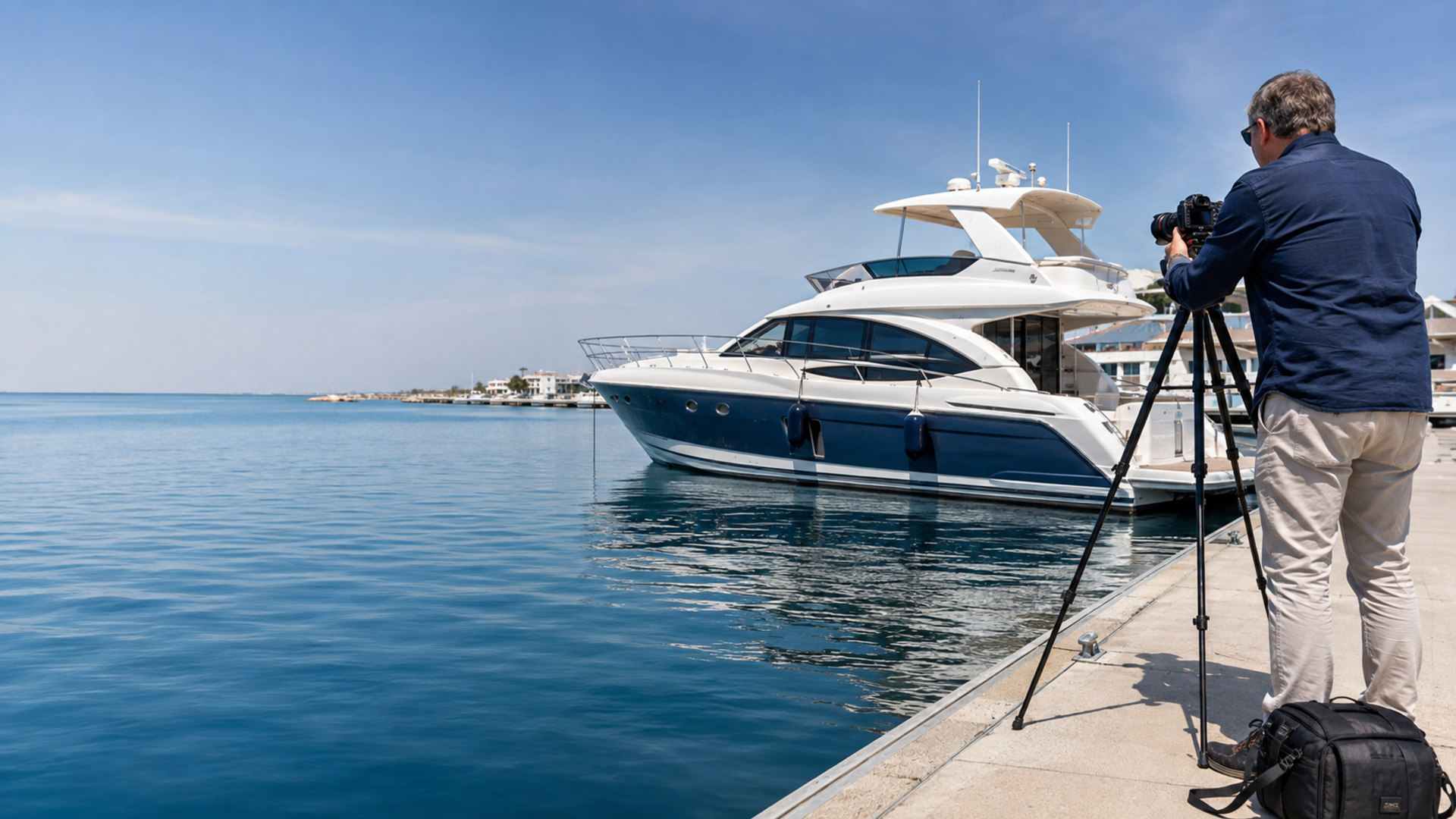
A buyer researching a builder is judging craftsmanship and brand coherence as much as the finished model — visible build quality in joinery and finish detail, a consistent brand voice across every post, and evidence of a builder’s design philosophy carried through the whole range. Photography and video of real build process, not just staged finished-boat shots, are what a builder’s feed is judged on first.
What moves a browsing buyer toward a dealer enquiry is desirability and specificity. A post that explains a model’s design decisions in the buyer’s own language, a launch campaign that builds real anticipation, a brand voice consistent enough that a buyer recognises the builder instantly — each signals a brand worth the considered commitment a new build represents. Buyers comparing yards remember which brand felt most established and most desirable, not which posted most often.
This is why the discipline cannot be delegated to a generalist social media manager posting generic finished-boat photography on a fixed schedule. The content, brand consistency and launch sequencing that convert researching buyers into deposits are specific to how new-build decisions are actually made, and rarely understood outside the trade itself.
Dealer network coordination matters more here than in almost any other sector MMI works in. A builder's own channels set the brand tone that every dealer then echoes locally, and a builder that supplies dealers with consistent, on-brand assets sells more consistently across the whole network than one that leaves each dealer to represent the brand however they choose. Model-year transitions are a particular risk point: a dealer still promoting last year's specification alongside a builder already teasing the new one confuses buyers at exactly the moment clarity matters most.
The anatomy of a channel that builds demand, not just followers
The demand-winning machinery is specific to boat builders. A content calendar built around real build documentation — hull layup, joinery, systems installation — that proves craftsmanship through process, not claims. Model-launch campaigns sequenced to build anticipation before a model is even available to view. A consistent brand voice and visual identity carried across every post, because brand coherence is what buyers remember. And dealer-ready assets supplied on a schedule, so the whole network sells from the same current material.
Around that machinery sits the content that actually builds demand: delivery-day and first-sail content that shows the emotional payoff of ownership, technical explainer content that demonstrates real design thinking, and boat-show content that extends a physical event’s reach far beyond the people who attended. This is where our digital marketing for boat builders work and our social channels overlap deliberately: paid and organic both building the same brand desire in the same researching buyer.

The content engine: your real demand channel
Most builders treat social media as brand decoration when it is, in practice, where a growing share of buyers form their opinion of the brand before ever contacting a dealer. A programme that treats the channel as a demand-generation engine outperforms an occasional, unplanned presence.
Ours is engineered around a proven anatomy: a build-documentation calendar that proves craftsmanship continuously, model-launch sequences that build real anticipation, and dealer-ready asset delivery that keeps the whole network selling consistently. Around the engine sits machinery buyers never see: UTM-tagged links from bio to dealer-locator and enquiry forms, brand guidelines that keep every post recognisable, and monthly reporting that separates genuine dealer-referred enquiries from vanity engagement.
International reach matters more for builders than for almost any other sector, because export markets often represent a majority of sales. A content calendar that plans for the two or three largest export markets, not just the home market, captures buyers a domestic-only feed quietly misses, and that planning should extend to language, not just geography, wherever a real share of buyers reads in something other than English.
What better social media marketing is worth, in numbers
The commercial case for a professionally managed social media programme is not folklore; it is measured. Stanford’s web-credibility research found that around 75% of users judge a company’s credibility from its design and presentation alone — for a builder, that judgment shapes whether a buyer even contacts a dealer. Google’s own research puts the first visual impression at about 50 milliseconds, and found that 53% of mobile visitors abandon pages that take longer than three seconds to load; industry conversion studies consistently price each extra second of delay at roughly 7% of conversions, a cost that applies just as directly to a slow-loading model page shared from social. In builder terms the arithmetic is direct: a single new-build order can be worth well into six figures, so if better social media marketing for boat builders wins even one additional order a quarter, it repays the programme cost many times over almost immediately.
These returns compound in a way an unmanaged feed cannot. A well-run programme keeps building brand desirability as the content calendar matures, converting a rising share of researching buyers into dealer enquiries as the build-documentation library and brand recognition grow, while a stale feed drifts the other way as buyers default to whichever brand feels more current and more established. That gap widens with every model cycle a builder leaves its channel under-resourced, and rarely closes once a competing brand pulls ahead in perceived desirability.
The same arithmetic works in reverse. A builder with a thin or inconsistent channel is not simply less visible, it is quietly losing the brand comparison every considered buyer runs before ever speaking to a dealer, and that comparison happens whether or not the builder is part of it.
What an MMI project includes
One accountable programme for boat builders: channel strategy and a build-documentation content calendar; model-launch campaign sequencing; brand guidelines and consistency management; dealer-ready asset delivery; owner-moment content for delivery days and first sails; and monthly reporting tied to dealer-referred enquiries, not just likes. Programme build starts from €4,500 with management typically €1,200 to €3,000 a month, priced fixed and quoted in writing before work begins. First-year setup includes a full brand guideline document built around your existing identity, at no extra charge.
After the initial build, most builders keep us managing the channel year-round, documenting new builds as they progress and sequencing launch campaigns around the model calendar. Read our story to see why that stewardship model exists.
Proven where builder brands actually compete
We do not ask builders to trust a portfolio in the abstract. Builder models move constantly through brokerbarche.com and yachtbrokersgreece.com, the brokerage platforms we operate, so we see directly which brands hold resale value and buyer desirability years after launch, not just at the boat show. When we specify a brand-consistency approach or a launch sequence in a client account, it is informed by watching real resale behaviour, not theory. Standards and market context come from the industry bodies we follow — NMMA, MYBA and ICOMIA — not generic marketing folklore.
That operating experience is also why our scopes are precise: we know which content actually builds brand demand for a given builder’s model range and price point, which posts dealers actually use and buyers actually remember, and we quote every proposal itemised against outcomes rather than deliverable jargon. We track every enquiry back to the campaign or post that produced it, so the reporting we send is a record of demand, not a list of impressions delivered.