Marine mechanic website design has to win a search that often starts in a moment of real frustration — an engine that will not start the morning of a charter, a gearbox making a noise nobody likes. Marine Marketing International designs and builds marine mechanic website design projects for engine specialists, boatyards and repair companies across the Mediterranean. This page explains how we approach the brief, what a mechanic's site must do that a generic trade-services template cannot, and what a project with us includes.
Fast facts
- MMI's marine mechanic website design projects start from €4,500 and are typically live in 4–6 weeks.
- Most enquiries are urgent and local: boat owners searching "marine mechanic near me" want a phone number and proof of competence in seconds, not a brand story.
- Mechanic sites we design carry sub-2.5-second load targets on 4G, because most searches happen from a marina or the boat itself on patchy signal.
- Brand and engine-manufacturer certifications matter more here than in almost any other sector — they are the fastest possible trust signal.
Why marine mechanic website design has to win the urgent search
Most searches for a marine mechanic happen under real time pressure: an engine problem the day before a planned trip, a gearbox fault mid-season, a survey defect that needs fixing before a sale can close. Marine mechanic website design has to serve that urgency directly — a phone number and WhatsApp link visible without scrolling, a clear statement of what is fixed, and enough evidence of competence that a stressed owner calls this number instead of searching further.
That urgency changes what the website has to prioritise compared to almost any other marine sector. A charter company can afford a slower-considered booking journey; a boat owner with a dead engine cannot. Every marine mechanic website design decision on this page is judged against a single question: does this help someone in a hurry get to a phone call faster?
Read more about the discipline behind this on our marine website design service page, or see how the same trust-first thinking applies to a related sector in our work with yacht charter companies.
Repeat and referral business matters just as much as the first urgent call. An owner who gets fast, honest service once will call the same number every season after, and will recommend it to marina neighbours — which means a marine mechanic website design that captures contact details properly at the first booking turns a single emergency job into years of repeat revenue.
Seasonal demand shapes the workload heavily too, with a sharp spike in the weeks before the season starts as owners discover problems during pre-launch checks. A marine mechanic website design that makes booking easy during that peak window, rather than relying on owners persisting through an unanswered phone line, captures work that would otherwise go to whichever competitor answers first.
Service listings that answer the problem in one page
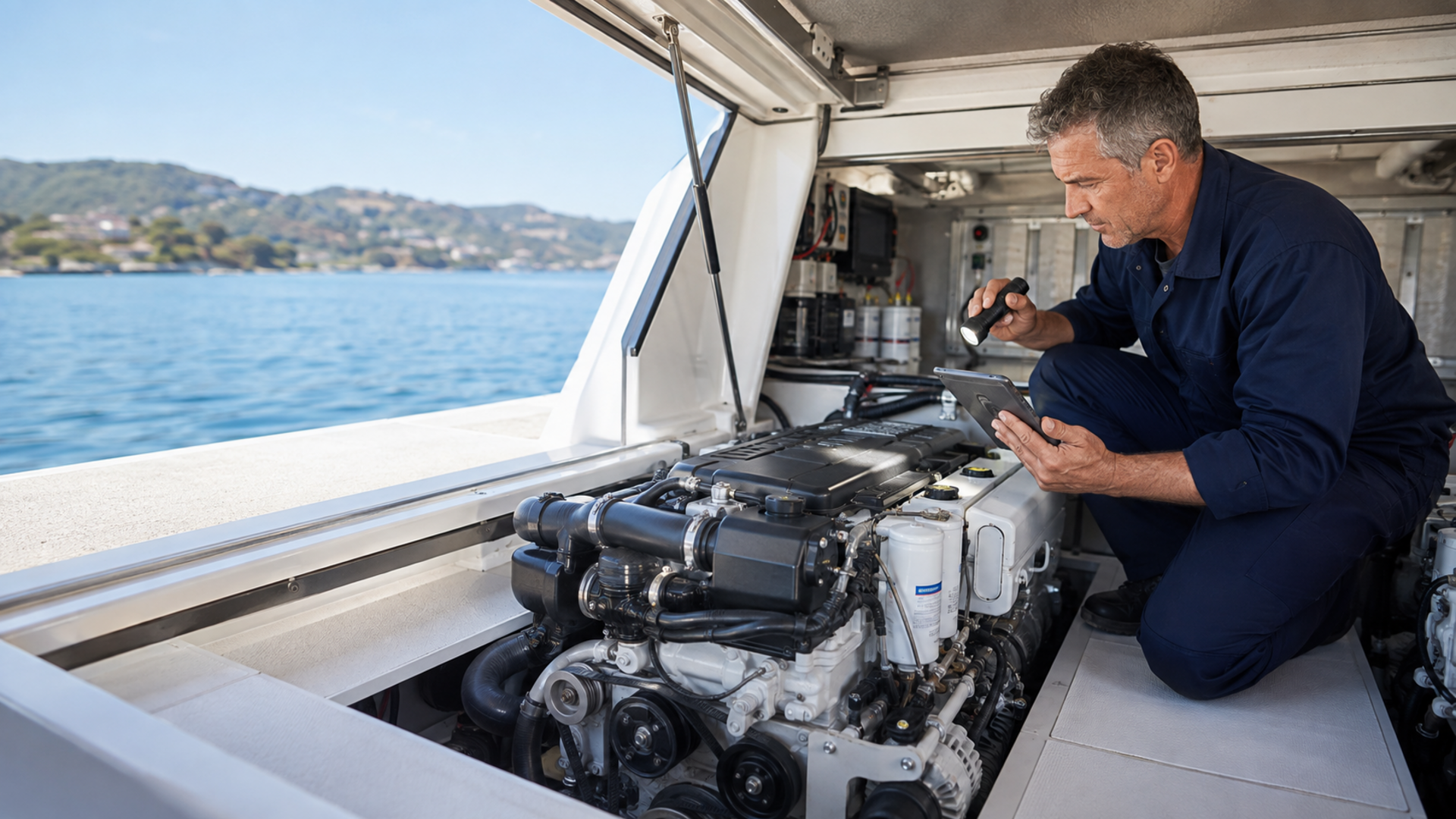
A boat owner searching for help rarely knows the technical name for what is wrong; they know the symptom. Marine mechanic website design lists services in the language owners actually use — "engine won't start", "overheating", "gearbox noise" — alongside the technical service categories, so a worried search lands on a page that clearly says "yes, we fix that" rather than a generic list of trade categories.
Engine brands serviced deserve their own clear listing too. An owner with a specific manufacturer's engine wants to know quickly whether this mechanic actually works on it, and a marine mechanic website design that states brand coverage plainly — rather than a vague "all makes and models" — reads as more credible precisely because it is more specific.
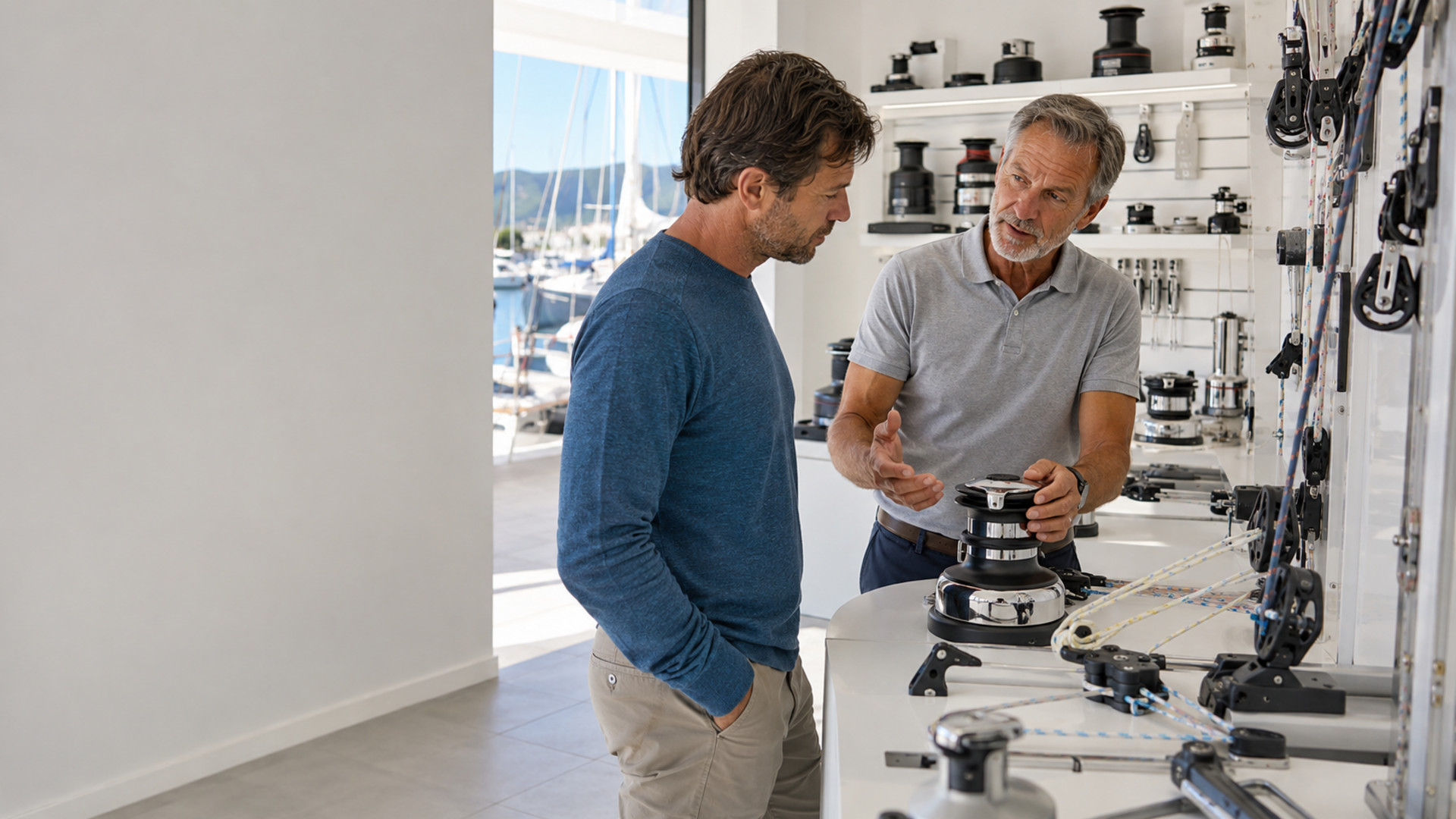
Boatyard and haul-out services, where relevant, need their own clear page too: what lift capacity is available, what work can be done on the hard, and how scheduling works during the busy pre-season period when demand for yard slots peaks hardest.
Callout and mobile-service coverage deserves its own honest page where it applies. An owner whose boat cannot easily be moved wants to know immediately whether the mechanic comes to the marina or the mooring, and what that costs, rather than discovering the limitation only after making contact — clarity here prevents wasted enquiries on both sides.
Design that reads as competent, not just busy
A mechanic's website should look like it belongs to a business that takes its work seriously, without pretending to be something it is not. Marine mechanic website design favours honest, real photography of actual workshop and engine-bay work over generic trade-template stock imagery, and layouts that get to the phone number and service list fast rather than burying them under decorative brand storytelling.
We deliberately avoid the visual habits that undercut trust in this sector: no stock photography of hands on an engine that is not actually the mechanic's own work, no vague "quality service guaranteed" claims without specifics, no navigation that hides the contact number below the fold. Every page is built around one question — can a worried owner find what they need and call within thirty seconds of landing here?
SEO foundations: found in the moment help is needed
Searches for a marine mechanic are almost always local and immediate: "marine mechanic [location]" or "outboard repair near me", searched from a phone, often from the marina itself. Marine mechanic website design has to be architected around exactly that from the first wireframe — location and service-area pages, schema markup that states opening hours and service area plainly, and copy written for both search engines and the AI answer engines owners now consult when searching for urgent help.
Speed is not optional here. An owner searching in a panic will not wait for a slow site to load on patchy marina Wi-Fi; they will call the next result instead. We build to hard performance numbers — sub-2.5-second largest contentful paint, modern image formats, host-tuned caching — on every page, not just the homepage.
Most independent mechanics currently rank on nothing but their own business name, leaving every generic "marine mechanic [location]" or "outboard repair [location]" search to a directory listing instead. A properly built marine mechanic website design closes that gap by owning the local pages a directory would otherwise capture.
Trust signals: certifications, brands and real work
An owner who has never used this mechanic before is deciding, often in under a minute, whether to trust a stranger with an expensive engine. That trust has to be earned fast: engine-manufacturer certifications shown clearly, years in business stated plainly, and real photography of actual completed jobs rather than generic trade stock imagery.
We also design against the standards the wider industry recognises. Mechanic and boatyard credibility is reinforced by association with bodies such as ICOMIA, British Marine and the National Marine Manufacturers Association, and a well-built marine mechanic website design gives manufacturer certifications and trade memberships proper visual weight instead of burying them in a footer.
Reviews matter enormously in this sector, arguably more than in any other marine trade, because most owners choosing a mechanic for the first time lean heavily on what other boat owners in the same marina have said. We integrate genuine reviews from the platforms your customers already use, rather than fabricating testimonials, since a suspicious review block does more damage to trust in an urgent-decision sector than having none at all.
Warranty and parts-sourcing information, while unglamorous, answers a question many owners hesitate to ask outright: will this be a proper repair with genuine or approved parts, or a quick fix that fails again next month. Stating this plainly on the page, rather than leaving it for a phone conversation, removes a small but real source of hesitation before the call is even made.
How a mechanic website project runs, week by week
Every marine mechanic website design project follows the same disciplined sequence, compressed for the sector's typically focused scope. Days one to three are strategy: keyword architecture, service-area mapping and a review of the brands and certifications to feature. Week two is design and copywriting, built around the business's real services and completed work rather than generic trade-template language. Weeks three and four are build, enquiry routing and any multilingual work. The final days are testing, speed tuning and a launch checklist before the site goes live.
You see working pages from week two onward, not a single reveal at the end, and nothing goes live without your sign-off. For boatyards with haul-out and multiple service lines, we add a short scoping step up front so the service structure is right from the start.

Launch is not the end of the relationship. We hand over a short admin guide so staff can update services, brands and availability independently, and we stay available through the first weeks of live enquiries — because a marine mechanic website design project measured only by a launch date, and not by the calls it produces afterward, is optimised for the wrong outcome.