Boat builder website design decides, long before a buyer signs a build contract, whether your yard looks like it can deliver the vessel in the brochure. A prospective owner comparing three builders judges engineering credibility, finish quality and delivery discipline from your website in under a minute, and forms a first opinion before ever visiting the yard. Marine Marketing International designs and builds boat builder websites that pass that judgment: model pages that read like a serious specification sheet, build-process transparency that reassures a nervous buyer, and enquiry paths built for a decision that can take a year to close. We operate marine platforms of our own — boatrentalbalearics.com, brokerbarche.com and yachtbrokersgreece.com — so every recommendation here is tested on live enquiry flow, not theorised.
Fast facts
- Boat builder website design by Marine Marketing International starts from €4,500, takes six to eight weeks, and is built on WordPress with full model-range and enquiry tracking.
- MMI operates its own marine platforms — boatrentalbalearics.com, brokerbarche.com and yachtbrokersgreece.com — so every recommendation is proven on live enquiry flow first.
- A boat builder website has under a minute to prove engineering credibility before a buyer moves to a competitor's model range; specification clarity is the first filter buyers apply.
- Every MMI boat builder build ships with sub-2.5-second load targets, schema markup, multilingual readiness and enquiry-tracked dealer and direct contact journeys as standard.
Why boat builder website design is its own discipline
A boat builder sells a promise that will not be delivered for months. There is no finished product to inspect on the showroom floor for most models, only renders, specification sheets and the builder's track record, so the website must do the work a test drive would do for a car. Generic web design treats a builder like any manufacturer with a product catalogue; boat builder website design starts from the length of the buying decision and the size of the deposit and works backwards from there.
The consequences are practical. The model page, not the homepage, is where a serious buyer spends most of their time, because that is where the specification, options and delivery timeline live. Build-process content needs to answer engineering questions in plain language — hull construction, lamination methods, standard equipment — because a buyer who cannot find the answer assumes the builder is hiding something. And the dealer and direct-enquiry paths must be kept separate, because a builder with a dealer network needs the site to route enquiries correctly without alienating either channel.
Consider two builders producing comparable craft at a similar price point. The one whose boat builder website design shows construction detail, honest pricing and a documented delivery history wins the deposit almost every time, because the buyer has no other reliable signal before the first showroom visit or dealer call. The other builder may build an equally good hull, but never gets the enquiry — the buyer simply narrows the shortlist online and never adds a name that reads as uncertain.
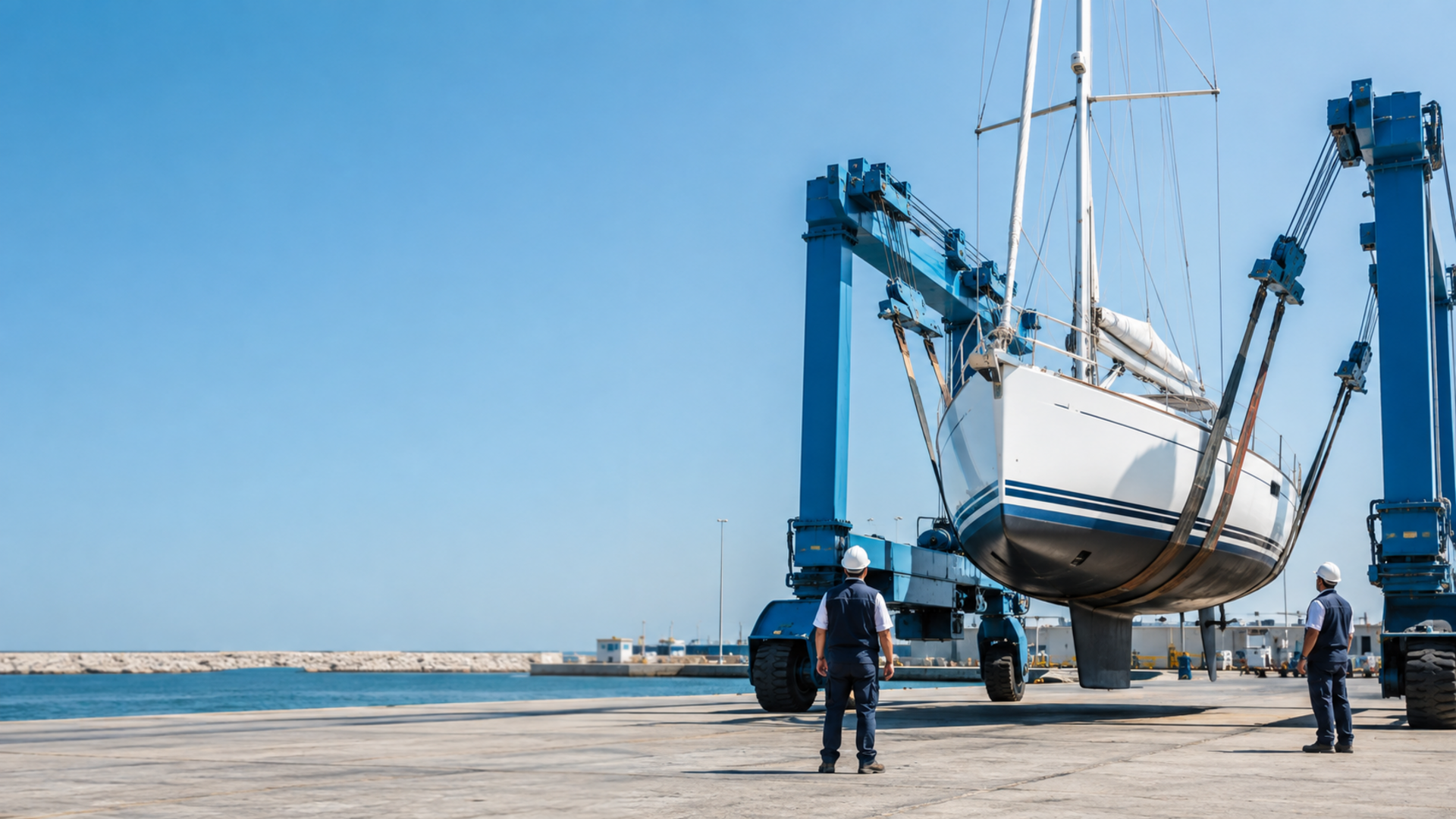
What buyers and dealers judge in the first minute
Buyers look for evidence the builder is established and consistent: clean model photography from multiple angles, a specification table that reads like an engineer wrote it, and a delivery history that proves the builder finishes what it promises. They are also judging financial stability — an outdated site raises quiet doubts about whether the company will still exist when their build slot arrives.
Dealers judge the site differently. Can they find a dealer locator, wholesale specification sheets and marketing assets without emailing a rep? A boat builder website design that hides these resources behind generic pages frustrates the dealer network that is often the majority of a builder's actual sales volume, and a frustrated dealer promotes a competitor's easier site instead.
Boat show attendees form a third audience worth designing for. A buyer who saw a hull in person at a show almost always returns to the boat builder website design before contacting a dealer, checking specification and pricing details they could not fully absorb on a crowded stand. If that follow-up visit lands on a slow, thin model page, the emotional momentum from the show is wasted, and the enquiry often never arrives at all.
This first-minute judgment is why boat builder website design cannot be delegated to a generalist template: the signals a buyer scans for — the model comparison, the construction detail, the delivery track record — are specific to the trade and rarely present in an off-the-shelf manufacturer template.
The anatomy of a boat builder website that wins build contracts
The contract-winning machinery is specific. A model range organised by category — day boat, cruiser, sportfisher — with configurable options and a clear starting price where pricing transparency helps rather than hurts. A build-process page that walks a buyer through construction with photography, because trust is built by showing the work, not just describing it. A dealer locator that routes enquiries by region, and a direct-enquiry path for buyers in markets without local representation. Delivery and warranty information stated plainly, because a first-time buyer is often more anxious about aftercare than about the build itself.
Around that machinery sits the presentation layer: studio and on-water photography treated with the same discipline across every model, configurator-style options tables, and a layout that reads with the same precision as the engineering it describes. This is where our marine website design system earns its keep for builders specifically: the same cinematic standard, tuned to specification and craftsmanship.

The model page: your real showroom
Most boat builder traffic never sees the homepage. Buyers arrive from a search for a specific model, a shared link from a dealer, or a marine show follow-up, and land directly on a model page. That makes the model page the highest-stakes template in any boat builder website design project, and it earns a disproportionate share of our design effort.
Ours follow a proven anatomy: gallery and specification first, because buyers compare models feature by feature before they read prose; an options and pricing block stated as plainly as the builder is willing to go, because hidden pricing reads as evasive; delivery timeline and warranty terms answered before they are asked; and related models beneath, so a buyer deciding between two sizes stays inside your range instead of drifting to a competitor's catalogue. Around the template sits machinery buyers never notice: schema markup so search engines can surface individual models with images, compressed imagery that keeps a full gallery fast, and enquiry events that show which models and options pull genuine interest.
What a better website is worth, in numbers
The commercial case for boat builder website design is not folklore; it is measured. Stanford’s web-credibility research found that around 75% of users judge a company’s credibility from its website design alone — for a builder, that judgment is made by buyers deciding whether to place a deposit months before delivery. Google’s research puts the first visual impression at about 50 milliseconds, and found that 53% of mobile visitors abandon pages that take longer than three seconds to load; industry conversion studies consistently price each extra second of delay at roughly 7% of conversions. For a builder, the arithmetic favours investment: if a faster, more credible boat builder website design converts even one additional order a quarter at a typical model value of €120,000 or more, it repays a €10,000 build many times over inside a single sales cycle — which is why we treat speed budgets and model-page presentation as revenue engineering, not decoration.
The same arithmetic works in reverse. A builder running an outdated, slow boat builder website design is not merely overdue an upgrade — it is actively filtering out the buyers who research online before ever calling a dealer, which today is nearly every serious buyer. That filtering happens silently, with no lost-order report to flag it, which is precisely why the cost is so often underestimated until a competitor with a sharper site starts winning the orders that used to arrive by reputation alone.
What an MMI boat builder website design project includes
One accountable package: strategy and keyword architecture for your market; model-page and configurator design; copywriting in your builder's voice; the WordPress build with your dealer and direct-enquiry workflow; photography direction for studio and on-water sets; on-page SEO, schema and metadata; multilingual versions with translated slugs for export markets; performance tuning to hard speed budgets; enquiry tracking wired to prove which models produce orders; and training for your team. Projects start from €4,500 and are priced fixed, in writing, before work begins.
After launch, most builders keep us as their outsourced marketing department — publishing new models, running campaigns, and improving the machine monthly. Read our story to see why that stewardship model exists.
Proven on our own marine platforms
We do not ask boat builders to trust a portfolio in the abstract. We operate boatrentalbalearics.com, brokerbarche.com and yachtbrokersgreece.com, marine platforms that compete for the same visitors’ attention that yours do. When we specify a model-page layout or an enquiry journey in a client build, it is the version that won on our own platforms after the losing versions cost us real enquiries. Standards and market context come from the industry bodies we follow — NMMA, ICOMIA and MYBA, The Worldwide Yachting Association — not from generic marketing folklore.
That operating experience is also why our scopes are precise: we know which parts of a boat builder build produce enquiries, which produce orders, and which merely produce invoices — and we quote every boat builder website design proposal itemised against outcomes rather than deliverable jargon. We know, for instance, exactly how much a slow model gallery costs in abandoned sessions, because we have measured it on our own platforms. It is also why our boat builder website design clients tend to stay with us for years rather than rebuilding every few seasons: the platform is built to extend, not to be replaced.